







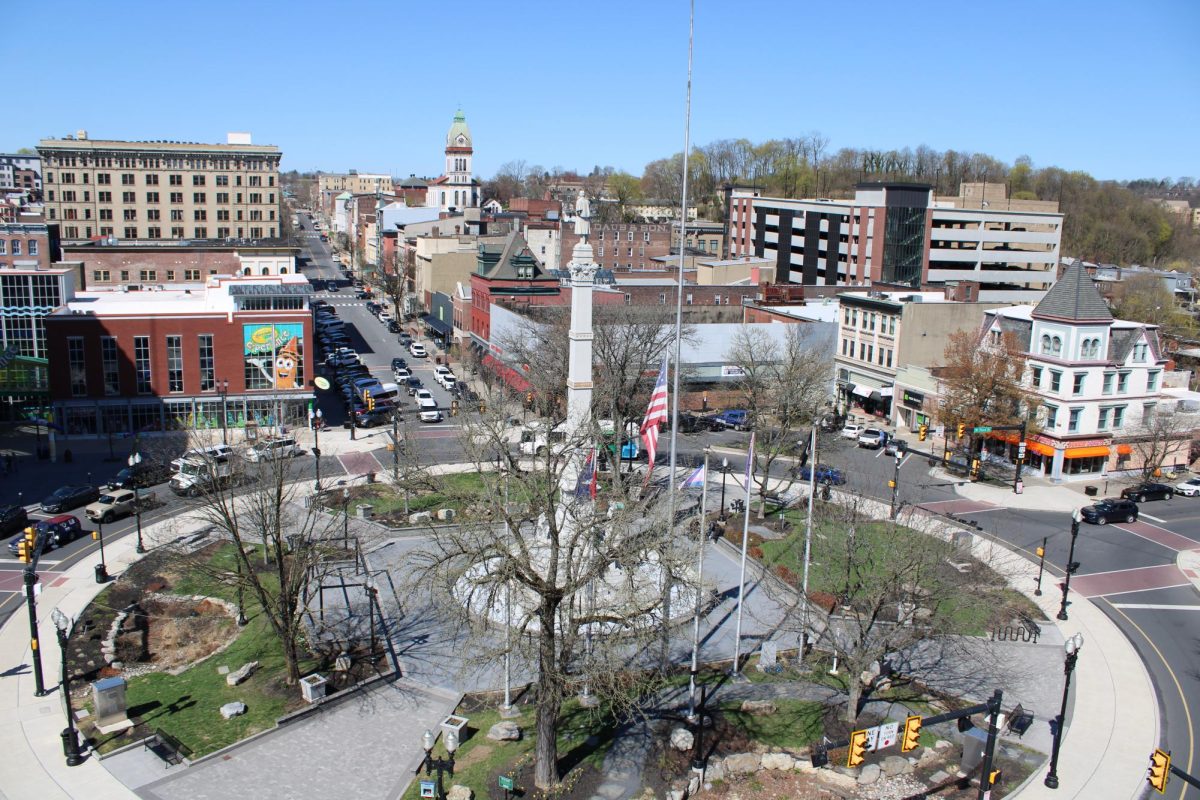




























Citing recent pedestrian vehicle accidents and heavy traffic in Easton, the city council may work with a federally funded program designed to prevent collisions, replacing a dangerous downtown intersection in the process.
The council met on Sept. 24 to hear a proposal from “Safe Streets for All,” a program of the United States Department of Transportation. If the city votes to work with the program, long-term changes — highlighted by a proposal to replace the 3rd Street and Larry Holmes Drive intersection with a modern roundabout — may be in the cards.
“The walk button, they’re not waiting for it,” said Easton Mayor Sal Panto Jr., referring to the intersection. On the corner of the intersection is a new apartment building, The Confluence, currently under construction; it’s also located at the entrance of the weekly Easton Farmers’ Market.
He said that if residents “wait for the walk button, all the traffic is stopped and they can walk safely across the street. But it is very wide, so it takes them a long time, especially seniors, to get across the intersection.”
If the city works with the federal program, pending a vote in the coming months, Panto explained that the Pennsylvania Department of Transportation would have to approve the city’s plans and ultimately fund the roundabout project. The proposed roundabout is designed for low speed, reduced collision points and continuous movement, according to a proposal by Chris Stanford, an engineer and consultant working with the city.
In order to receive future funding from the program, the city collected crash data from 2020 to 2024, identifying more than 1,100 crashes; 523 resulted in injury, including 29 serious injuries and four fatalities in the city.
Within the past few years, Easton Councilman Frank Pintabone noted that Larry Holmes Drive has had more than three fatalities. He said it was frustrating that the city still did not have a detailed traffic and road safety plan.
“This is not your traditional New Jersey traffic circle,” explained Stanford at the meeting, who presented the plan to the city council. Stanford could not be reached for further comment.
Stanford explained that unlike traditional traffic circles, which are designed for high-speed merging, modern roundabouts are designed with tighter curves, clear yield rules and pedestrian-friendly crossings. They slow cars to safer speeds, reduce conflict points and promote traffic flow, he said.

According to Pintabone, a no-vote on the “Safe Streets for All Plan” means the roundabout — still in its “early stages” — might not happen.
The intersection “can feel confusing and a bit hectic, especially when there’s a lot of traffic,” said Briella Longo ‘29, who often drives through the intersection. “The visibility isn’t always the best.”
Longo thought highly of the possible intersection renovation, saying that a “roundabout will make things feel less chaotic” and “would improve safety and flow.”
“It just feels like any other city,” Luke Azanero ‘29 said of Easton’s traffic. “I mean, you do have to be careful all the time, but as long as you walk on the sidewalk or look both ways, I think you’ll be good.”