









































































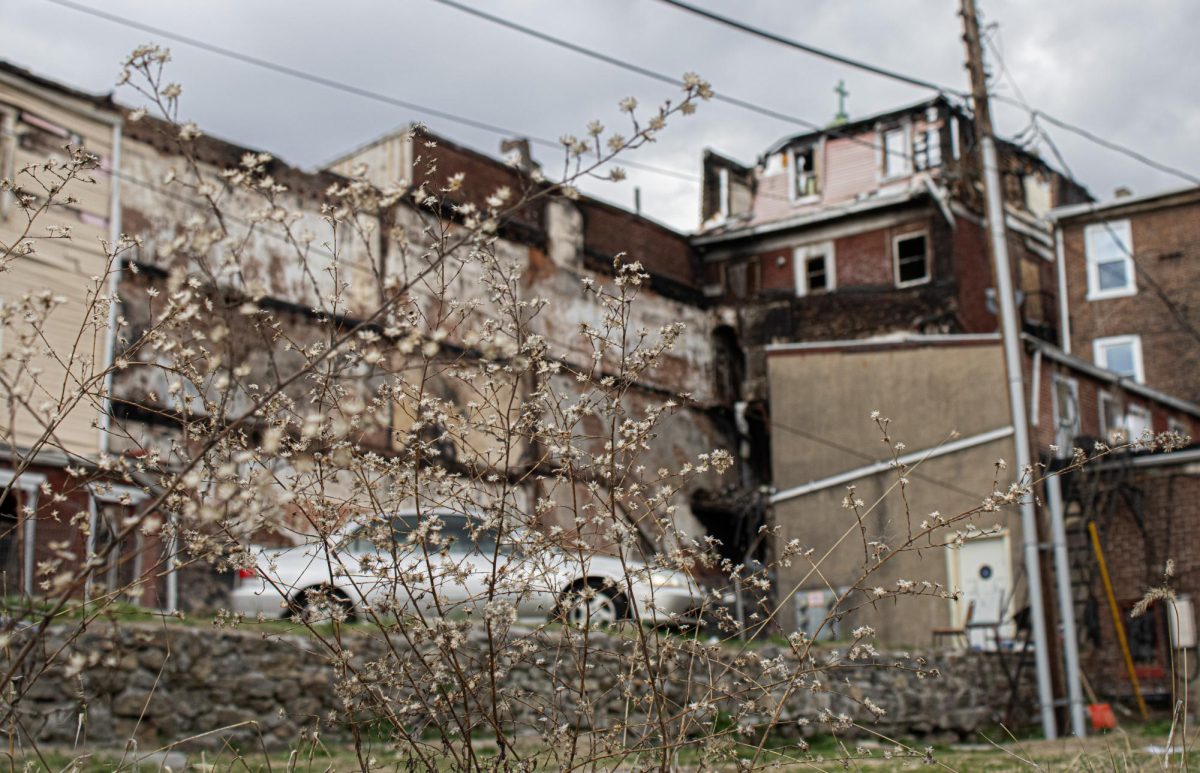
One day after a devastating fire tore through the Hotel Hampton complex in Downtown Easton, Fire Chief Henry Hennings told residents at a press conference that he hoped the fire’s dispatchers “are recognized as the true first responders” in the wake of the debris.
According to a federal report released Wednesday by the National Institute for Occupational Safety and Health, though, communication breakdowns and limited staffing may have contributed to danger at the scene. With just 15 firefighters called to the scene, per the report, a better response may have could prevented hazards and a serious injury to Wilson firefighter Bobby Lewullis.
Based on recorded interviews, the report further indicated that fire inspections had not been conducted in Hotel Hampton since 2017 due to limited staffing in the code enforcement and planning office. Over 40 Hotel Hampton residents were displaced due to the fire; a large community-wide response ensued.
Hennings deferred comment to City Administrator Luis Campos, who said the city is “in the process of reviewing the report with the various departments that are involved.” The city received the federal report on Tuesday, weeks after the city council announced a partnership with a third-party firm to improve fire safety compliance.
In an April interview with The Lafayette, Hennings acknowledged that the city “would have needed 49 firefighters to initially combat the fire,” and that the fire department “did not meet that.” The federal report recommended that 42 firefighters — including an incident commander, rapid intervention team, supervisors, incident safety officers, rescue teams and medical support — been called to a fire of Hotel Hampton’s scale.
The fire department, planning and codes division and possibly Easton’s legal division will review the federal report in the coming months, according to Campos.
“We will be able to then conclude that the recommendations that were provided make sense and, or provide additional recommendations to improve how we manage emergencies,” Campos said.
The inspection results cited in the federal report found “windows to the fire escape nailed shut, multiple nonfunctioning smoke detectors in hallways and bedrooms, fire doors propped open, and missing stair railings and exit signs.” It also called for the city to provide adequate staffing for designating dispatchers to specific emergencies.
“Effective fireground radio communication is important to ensure fireground command and control as well as enhance firefighter safety and health,” the report reads, adding that “the radio system must be dependable, consistent, and functional,” especially during emergencies.
The report added that multiple radio transmissions from Lewullis warning coworkers that he was out of air were missed. Running out of air, the Wilson firefighter escaped the building before his 20-foot fall.
Dwayne Tillman, the city’s director of planning and codes, did not respond to requests for comment.
