



































































By Sarah Welsh-Huggins
Photos Courtesy of Alec Imel and Gus Henninger


Last April, the Lafayette Men’s Crew took down Lehigh in a decisive victory to win the 2011 River Cup. For the first time in eight years, Lehigh’s varsity program was defeated by Lafayette, a school where crew is only a club sport.
But being “only” a club team never hindered the Lafayette rowers. Nor does it deter athletes from other Lafayette clubs, whose commitment sometimes matches that of the varsity level.
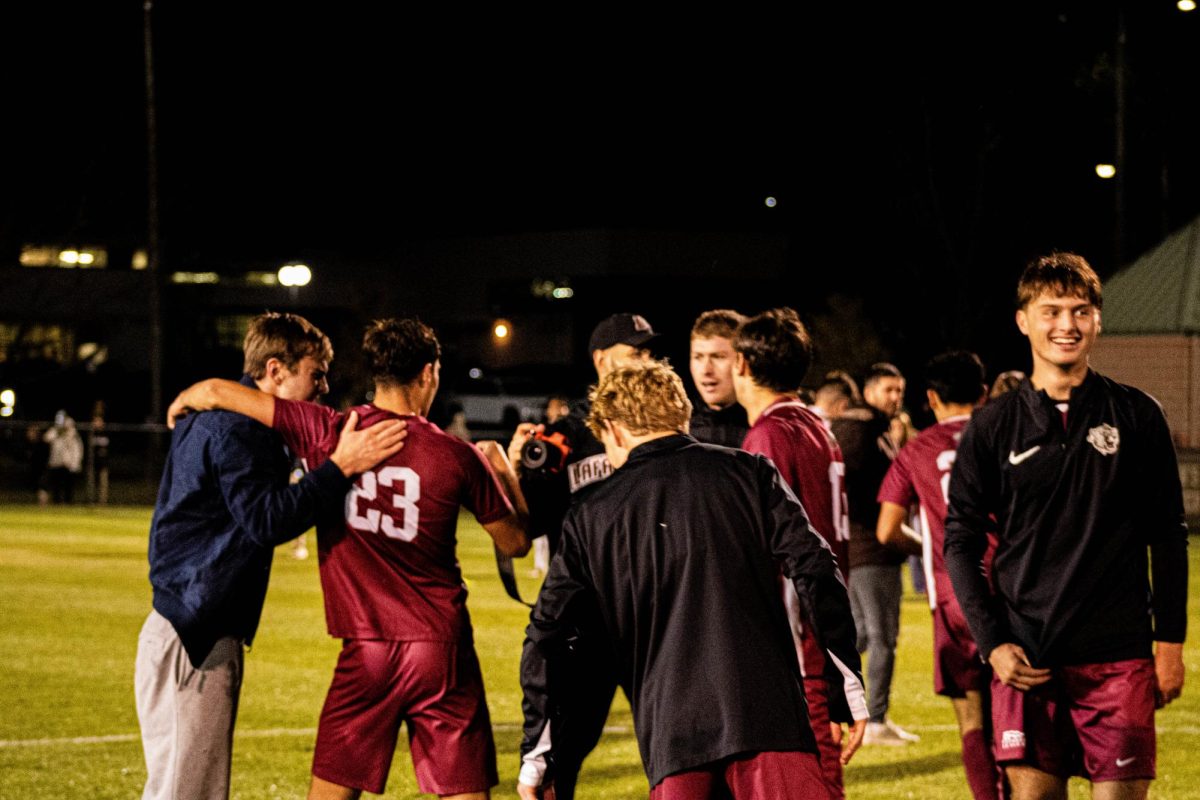
According to Vice-President of the men’s club Soccer team Greg Bernstein ‘12, “This is the most competitive league I’ve ever played in.”
Crew club President Garret Rice ‘12 agreed. “A lot of people think we’re varsity,” he said. “The level of commitment is on par with varsity. Most of the people on the team were very athletic [in high school.]”
For many former high school athletes, participating in one of Lafayette’s 32 club teams provides an opportunity to continue involvement with a sport outside of the strict time confines of a varsity team.
“It’s the best kids you ever played with,” said Nick Foerst ‘12, the current president of club soccer. Forest failed to make the team his freshman year and had to return for tryouts as a sophomore. “It’s pretty rare to get freshmen who could come on the team,” he said.
Like in club soccer, every member of the Lafayette Club Ice Hockey Team played hockey before college.
“It is a hard sport to just pick up, because ice skating needs to be almost second nature before someone can even play,” said Alec Imel ‘12, a forward for the hockey club.
Clubs such as rugby, crew and quidditch are equally as competitive, but provide opportunities for former varsity athletes to transfer previously-developed skills to a new pastime.
Jared Katz ‘12, founder of the Lafayette quidditch team, appreciates the humorous perception of his sport, but said that the need for quick reflexes, stamina and strategy legitimize it as a real sport.
“I like to point out that it’s full contact,” he said. In his opinion, quidditch shares “the physicality of rugby and other contact sports.”
The team is split between players with no athletic experience and with those who played multiple varsity sports in high school.
Like the quidditch team—currently ranked 18th in the world—many club sports teams focus on their competitions against other schools. Others, however, organize themselves on a more recreational level.
President of the Tae Kwon Do club Kate Yoder ‘13 stated “I prefer the skill more to competing.” Unable to continue her training in Cuong Nhu at Lafayette, she jumped at the chance to learn a new style of martial arts. “A lot of girls are nervous when they start out,” she said. As a leading member of the club, “I try to show them it’s not that scary.”
For Yoder, her involvement with Tae Kwon Do has less to do with winning a tournament and more with developing her skills and staying fit. Similarly, sports like badminton “don’t have a lot of people interested in playing seriously,” said club president Xingjian (Max) Ma ’14. But he enjoys it because “it’s fun and good exercise.”
Regardless of the club, “The commitment level is phenomenal,” said Tyler Davis ‘13, associate supervisor for club sports. “A lot of people who stick around [club sports] have never played before.”
The athletic goals of teams vary widely: many clubs never face their Lehigh counterpart in competition, as Crew did last spring. But, as Davis said, the hundreds of students who play on club teams “Do it for the love of the sport.”