



















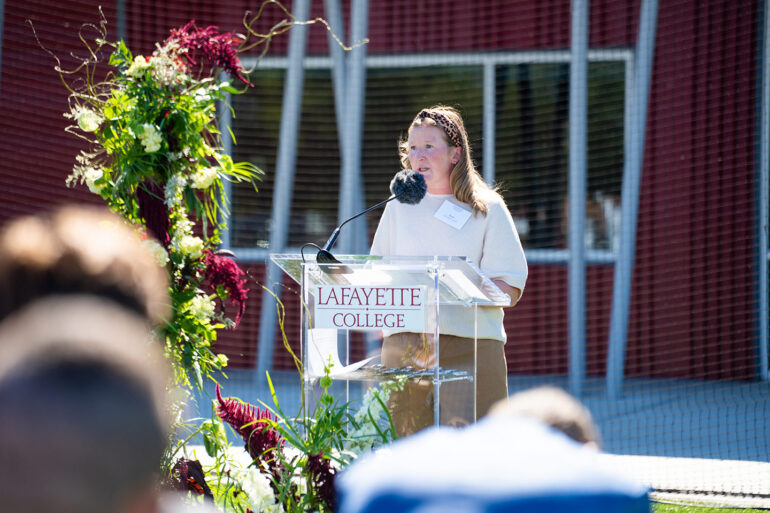



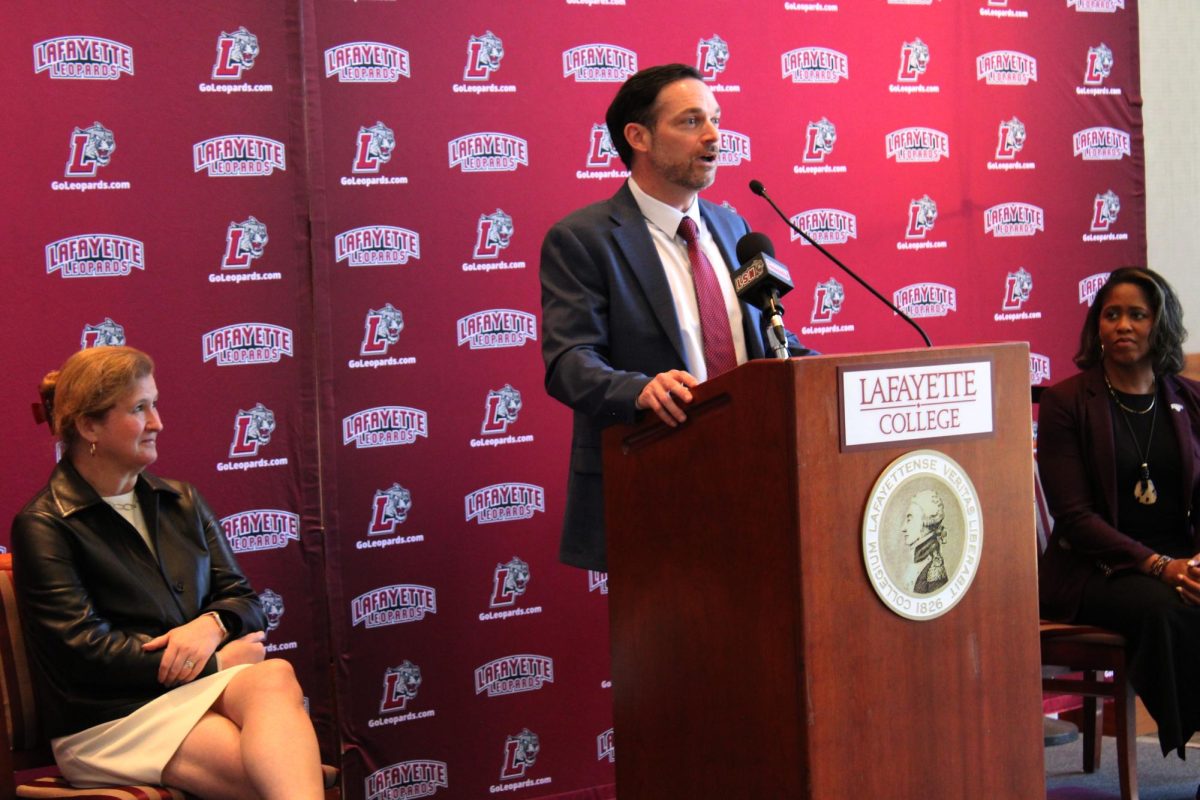










College President Nicole Hurd screened the first episode of “The Class” — a PBS docuseries executive-produced by her and actor Daveed Diggs — to a crowd of about 40 people on Wednesday.
The docuseries follows college advisor Cameron “Mr. Cam” Schmidt-Temple and six socioeconomically disadvantaged high school seniors as they navigate applying to college amidst the COVID-19 pandemic during the 2020-2021 academic year.
“This was one of the most powerful things I’ve seen,” said Ernest Jeffries, an audience member and the college’s vice president for inclusion.
“I was one of those kids,” he continued. “Fortunately, I ended well, but we didn’t have that kind of core resource in my high school.”
Geology professor David Sunderlin, who also attended Wednesday’s event, said he was inspired by Schmidt-Temple, the filmmakers and the “whole vision of the program.”
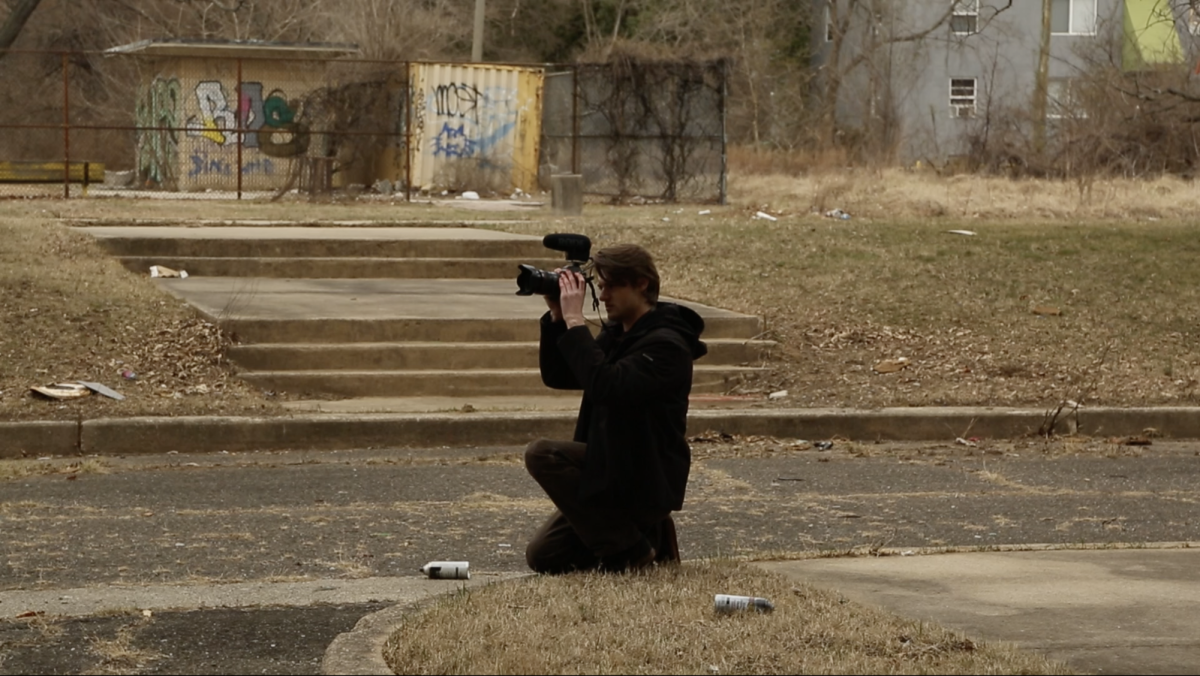
Hurd was joined by Schmidt-Temple and the docuseries filmmakers Jaye and Adam Fenderson for the screening, a Q&A session and a reception.
“I think the documentary at a time right now is gonna show a really strong counter-narrative for why the work needs to exist,” Schmidt-Temple said in reference to federal diversity, equity and inclusion funding cuts.
The series highlights College Advising Corp, a non-profit founded by Hurd that works to make higher education more accessible and equitable. The organization has helped almost 850,000 high school seniors pursue higher education.
“We’d gotten a lot of momentum,” Hurd said of the organization. “But we knew that we wanted the story to be told so people can really see the work, and Jaye and Adam were the perfect storytellers to help us tell the story and make impact.”
While the docuseries was not initially intended to cover a pandemic, the timing helped highlight the resilience of the students and exposed areas of improvement to help disadvantaged students.
“I think it really showed some failures where we could have done better to support those students,” Schmidt-Temple said. “The way that I think about it is, again, how do we support the students? How do we expect changes to happen if we don’t change the way that we serve students?”
Hurd said their goal is to “address systemic barriers that allow our classrooms to actually look like our country.”
“We all believe there are not enough first-generation, low-income and underrepresented students going into higher education, that the barriers for those students are real,” Hurd said.
The documentarians decided to focus the story on California schools when Spring 2020 travel restrictions kept them in the area.
“We also fell in love with Cam,” Jaye Fenderson said. “I mean, when we talked to him, his passion for the work was so evident, even on a Zoom call, that we have to follow this story.”
She added that Schmidt-Temple’s ability to engage with them over Zoom became “crucial” in telling a story about COVID.
Diggs called supporting the project a “no-brainer” in a September interview with The Lafayette.
“It started small, and then it just grew and grew, and then paused for years while we tried to find distribution,” Adam Fenderson said of the docuseries. “And now we’re here.”
Allison Stein ’27 contributed reporting.