

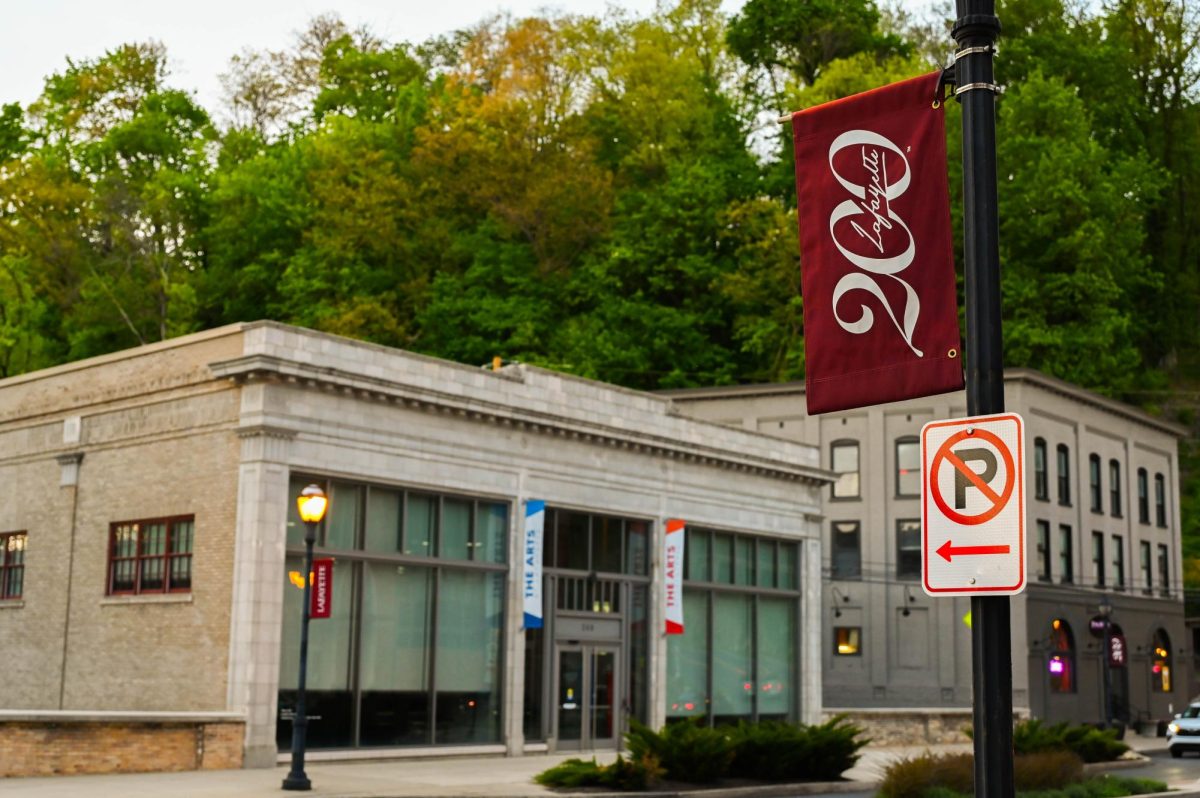






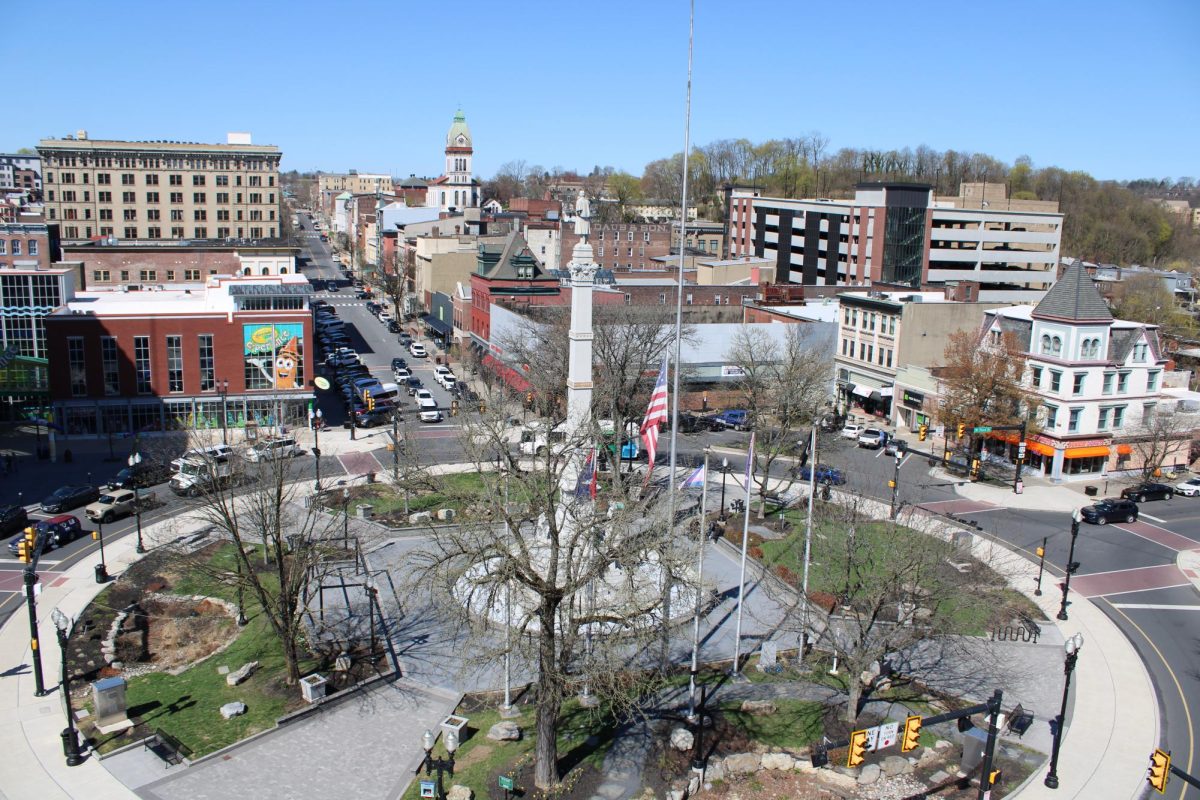





























Pardee Circle, the arts campus, several campus-wide energy saving methods: these elements of Lafayette College all came from the same source, the interdisciplinary course Technology Clinic, better known simply as Tech Clinic.
“Being able to actually make an impact is so cool,” said Izzy Reber ‘27, who is currently in the class.
Every year, the course’s advisory board and two facilitating professors select a team of five to seven students to solve a complex, real-world problem brought to them by a client, ranging from huge corporations, local nonprofits or the Lafayette campus itself.
“The team of students spends a year working to envision and then potentially implement innovative solutions,” said geology professor Lawrence Malinconico, who currently facilitates Tech Clinic alongside emeritus anthropology professor Dan Bauer, who founded the class in 1986.
The current course client is the Easton Area Neighborhood Center. Students are digitizing and analyzing demographic data from the center’s food pantry, supplied by an on-site urban farm, to better understand who it serves.
Bauer and Malinconico said Tech Clinic transformed this urban farm from a community garden in 2012. Eventually, the Neighborhood Center “adopted it,” and now the class is working with it once more.
This is not the first time the course has focused on the Easton community.
“We thoroughly review the Tech Clinic report, and we try to implement as much as we can,” Easton Mayor Sal Panto Jr. said about working with the class. He cited the urban farm as an example.
“We took some of their considerations, their recommendations,” he continued.
Bauer first started the program when the college received a grant from the Sloan Foundation that encouraged the college to incorporate technology into the liberal arts.
The Tech Clinic’s first client was a hydroelectric facility on the Susquehanna River. In order to “eat” logs floating downstream, the class designed a trash-eating device — based on water strider insects — to clean the river.
“You can now find these machines worldwide,” Bauer said. “You’ll find them in various parts of Asia, West Coast, East Coast.”
Past Tech Clinic projects also include working with villages in Peru, collecting data on vaccine hesitancy in the Lehigh Valley and encouraging economic development in Easton’s West Ward.
Bauer emphasized the importance of being “curious and respectful” when students collaborate with one another and with clients.
“The first few Tech Clinics were based on the model of students who are not experts in a given field, nonetheless have creative and academic skills that they can bring to real problem solving,” said biology professor Nancy Waters, who has advised the class.
Waters facilitated a 2013 clinic on building a trout farm and maintaining trout populations for Country Springs Farm.
Each Tech Clinic includes at least one student from each of four divisions: humanities, social sciences, natural sciences and engineering.
“One of the learning experiences that occur for the students, besides learning how to interact with each other and think out of the box, is learning how to interact with students who think differently than they do,” Malinconico said.
“It’s an interdisciplinary project,” said economics professor David Stifel, who also facilitated Tech Clinics and served on its advisory committee.
He recalled the clinic focused on the Slate Belt’s economic development, when its client was the Slate Belt Council of Governments and Chamber of Commerce.
Students “learn what the real world is going to be like when they leave,” Malinconico said. “It’s very rare now, you’re ever going to go out and work in isolation. You’re going to be working in a team.”
“That becomes a really important learning experience,” he said.
Andreas Pelekis ’26 contributed reporting.
Disclaimer: Editor-in-Chief Elisabeth Seidel ’26 is a member of Technology Clinic. She did not contribute writing or reporting.
