
































































By Julie Depenbrock ‘13
Graphic by Kate Cherney ’15/ The Lafayette
It seems there are three certainties in life: death, taxes, and tuition increases.
Next year, tuition will be $57,050, a 3.75 percent increase from 2012-2013.
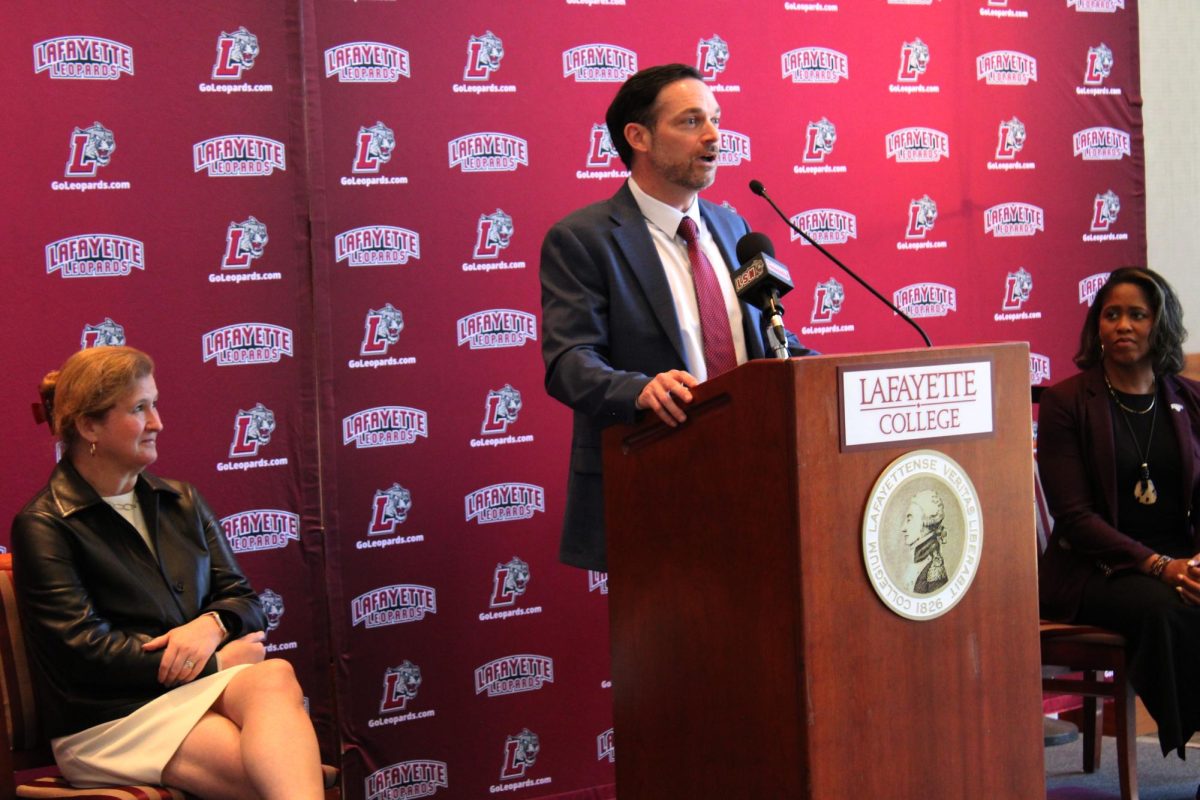
“The costs that drive higher education all rise at rates in excess of inflation,” President Daniel H. Weiss said. “So it’s very difficult to contemplate how any college or university can go below inflation on a steady basis and continue to operate.”
Some surveys have shown, however, that a handful of private colleges are freezing and even reducing tuition. Most are lesser-known colleges. But one prestigious school, Mount Holyoke College in Massachusetts, is among them.
Lafayette’s tuition has been rising since the college started keeping track 38 years ago—and probably before that, according to Weiss. But what are students paying for?
The cost of labor, first of all. Keeping the salaries of faculty and administrators competitive in a harsh economic climate is “the number one cost driver,” Weiss said.
Second is the cost of educational materials: books, periodicals, lab equipment, and classroom technology.
“Technology is many things, but cheap is not one of them,” Weiss said. “So the cost increases associated with technology are also high. What we try to do is manage our costs, restrict our increases as best we can. But at the end of the day we have to balance our budget.”
Third is the endowment, which still hasn’t recovered from the economic downturn in 2008.
Over the past four years, tuition has risen 10.8 percent.
“We can’t freeze salaries of faculty and staff over a longer period of time and be competitive. We can’t stop buying books and materials. We can’t shut down labs. We can’t really go much lower than about 3 percent on a sustained basis and maintain the ability to function and be competitive,” Weiss said. “And we can’t go much above 4 percent on a regular basis without hurting our students and their families.”
Most colleges disclose tuition rates for the upcoming year in January or February. Haverford, where Weiss moves in July, recently announced a $2,454 increase up to $59,446.
Other schools are planning an increase as well, though perhaps not as much.
Bucknell University estimates the cost of tuition will rise to almost $58,000, an increase of about $1,810.
But not every private institution is climbing the upward slope.
Belmont Abbey, a Catholic liberal arts college in North Carolina, is reducing tuition by 33 percent for incoming freshmen and transfer students. Belmont’s president said in a Huffington Post story that he hoped to “stop the madness” of rising tuition costs.
Weiss said a similar decrease here would hurt academic growth and stifle the school’s efforts to compete.
“We could do it too. What would you like us to get rid of? Should we get rid of the science departments or maybe close the athletic center?” Weiss said. “All of the things that we do cost money. So schools that are reducing their budgets dramatically are doing so because they feel they have to.”
“It’s not sustainable,” he said.
However, Mount Holyoke—ranked ahead of Lafayette by U.S. News & World Report—has frozen tuition rates for the second straight year.
Mount Holyoke’s Director of Student Financial Services Kathy Blaisdell worried that if tuition prices kept going up, the school would not attract students of diverse socioeconomic backgrounds.
Still, she is realistic about Mount Holyoke’s future.
“We can’t do this forever,” Blaisdell said. “We’re expecting tuition to go up for 2014-2015, but we want to keep that increase modest.”
In 2011-2012, no college charging more than $50,000 reported a decrease in tuition rates, according to The Chronicle of Higher Education.
But, at Lafayette, not all pay the ticket price.
Over 60 percent of students receive some form of financial aid—grants, loans, scholarships or campus employment, Director of Financial Aid Arlina DeNardo said.
The other 40 percent have one opportunity to avoid the tuition increases.
The college has a plan for families to pay two to four years of education up-front. Families can “lock in” tuition at the current rate, and that rate will apply for the rest of the student’s Lafayette career. The plan is only available to students paying full price, not those receiving financial aid.
“We are committed here at Lafayette to providing a world-class educational experience,” Weiss said, “and quality must be paid for.”