










































































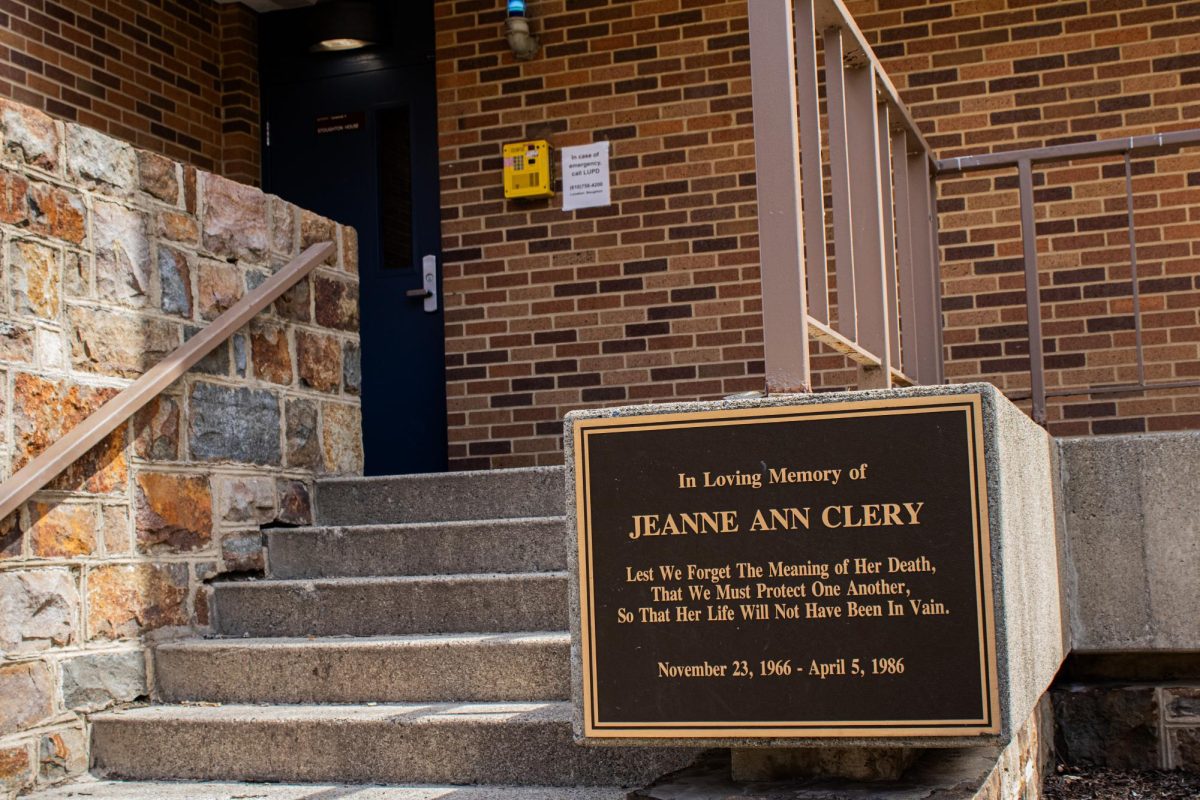
Forty years ago, on April 5, 1986, Lehigh University freshman Jeanne Clery was raped and killed in her dorm room by another student.
Clery’s parents sued the university, alleging their daughter would not have attended Lehigh had they known about dozens of unpublicized violent crimes committed in the years before her death. Furthermore, they lobbied for policy changes requiring schools to publicize information about campus safety.
Those policies eventually formed the Clery Act, which established crime reporting standards for every higher education institution in the United States.
Daniel Carter, a campus safety consultant and former director of public policy for the Clery Center, said Clery’s murder “foundationally changed campus safety in the United States.”
“It set a pattern in motion where campus safety is talked about,” he said.
At Lehigh, the university’s police department unveiled a memorial in honor of Jeanne Clery on March 24. The memorial, located in the police department training room, focuses on Clery’s legacy as an “always present, always genuine” friend and classmate.
“It just seemed to me that it was really important to preserve the memories of Jeanne and who she was as a person,” said Jason Schiffer, the associate vice president for campus safety and the chief of police at Lehigh.
Schiffer added that Clery Act training for Lehigh’s campus police includes personal stories of Clery.
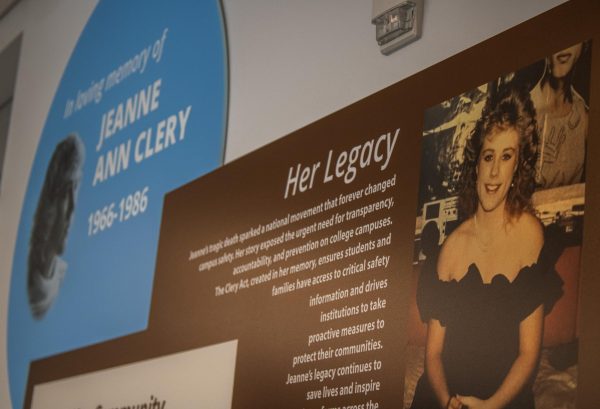
“I wanted to humanize the reality that this isn’t just a formalized law where we’re looking to check boxes,” Schiffer said, adding that Lehigh “absolutely has an obligation” to honor Clery’s legacy.
“I don’t think an incident like this could ever happen on a college campus without leaving a profound impact on everyone,” Schiffer continued. “It’s so special that Jeanne’s parents turned this tragedy into something that’s made college campuses safer for everyone.”
Clery’s parents’ advocacy originally called for reporting and transparency standards, according to Carter, the former public policy director. It began with a simple brochure, encouraging college applicants to mail questions about crime statistics and campus safety practices along with their application materials.
“The people they were asking didn’t even have answers themselves,” Carter said. “Tour guides, admissions officers, didn’t know anything about these things, or what little they did know was not a comprehensive picture.”

Buoyed by overwhelming bipartisan support, President George H.W. Bush signed legislation that became the Clery Act on November 8, 1990.
The modern iteration requires colleges and universities receiving federal funding to publicly report information about crimes reported on campus. Schools must publish annual security reports, maintain daily crime logs and issue timely warnings about serious or ongoing threats to the community.
The act now also encompasses guidelines for how an institution should provide disciplinary proceedings and information to victims in cases of dating and domestic violence, sexual assault or stalking.
Several institutions have been penalized for violations of the act, including Michigan State University and Penn State University for staff sex abuse scandals, and Liberty University, which was fined a record $14 million in 2024 after investigation into its sexual misconduct policies.
Lafayette College was one of the original members of what is now called the Clery Center, the Pennsylvania-based nonprofit that helps organizations ensure compliance with Clery Act rules, according to Director of Public Safety Jeff Troxell.
Troxell wrote in an email that Public Safety regularly meets with the college’s Clery Compliance Committee, made up of campus stakeholders, as well as the Pennsylvania Clery Compliance Committee, composed of other institutions.
