
























































In the Archives Nationales now lies the story of the Marquis de Lafayette’s connection to France and the United States.
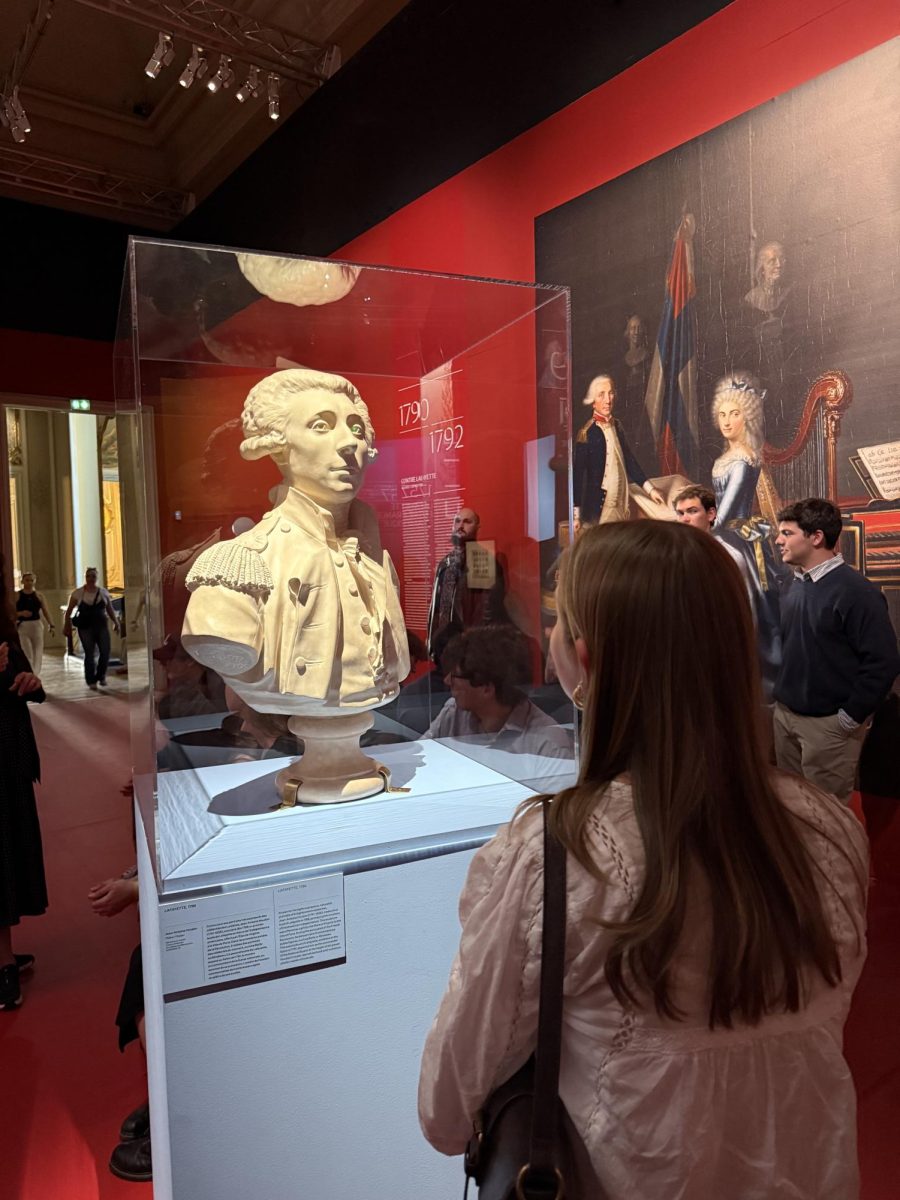
The “Lafayette Between France and America: History and Legend” exhibit in Paris opened April 1 in the National Archives of France, taking up five rooms and housing 114 historical items, nearly half of which were shipped from Lafayette College’s collection. The pieces range from letters and paintings to model ships.
Featured letters written between Lafayette and George Washington are “some of the most unique and priceless pieces lent to the French National Archives for this exhibit,” said college archivist Elaine Stomber ‘89, who helped curate the exhibit.
The project itself was the result of significant collaboration between American and French archivists, taking more than two years to come to fruition. Other pieces are sourced from the Chambrun Foundation, the Musée Carnavalet-Histoire de Paris and other French institutions, said Olga Duhl, a language professor and curator for the exhibit.
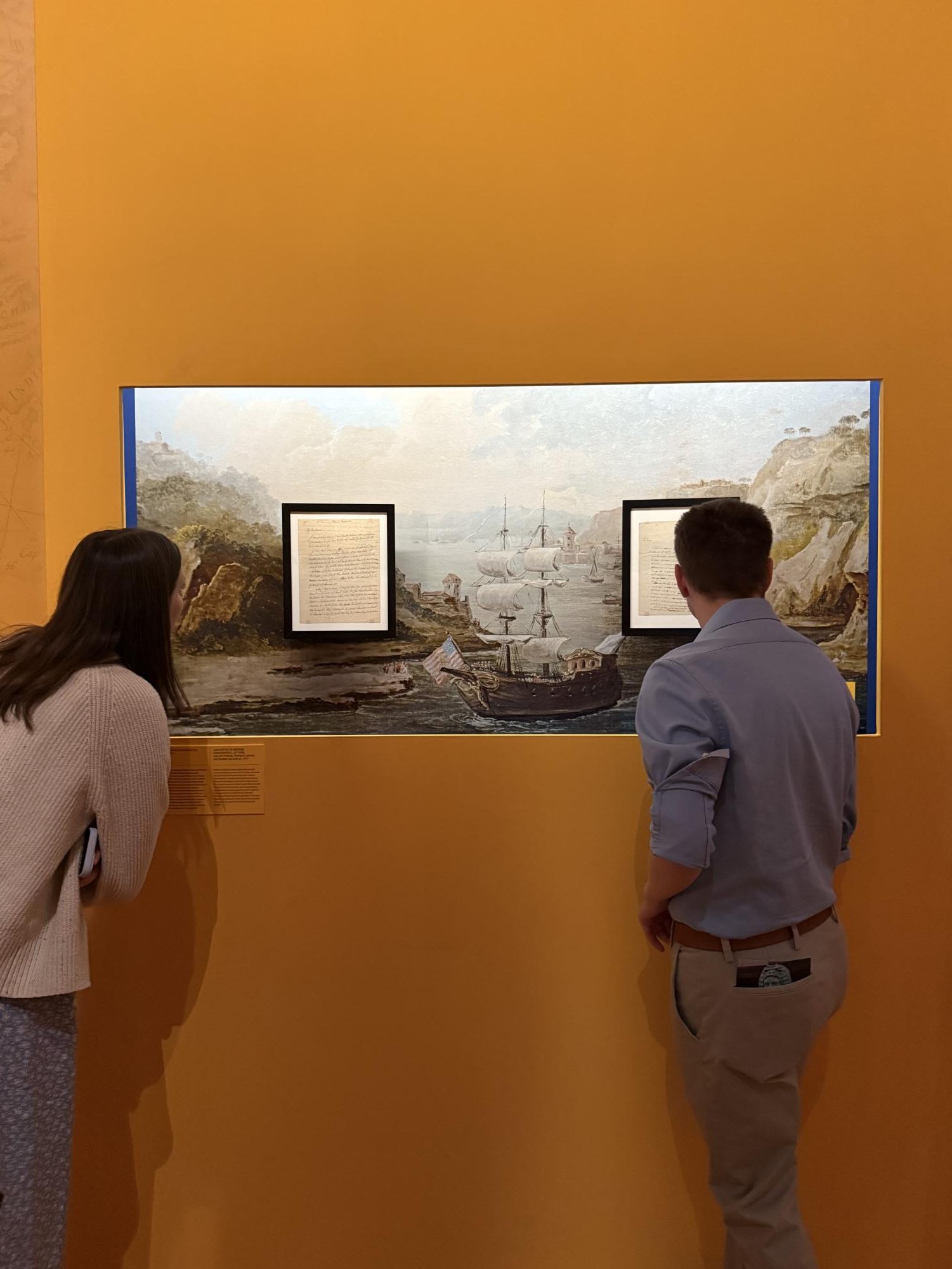
“Whether it is his special relationship with George Washington or seeing his impact across the decades from the US to France to Poland, one is moved by his consistent championing of human rights and liberty,” wrote college President Nicole Hurd in an email.
Students abroad in Madrid and Bonn, Germany, traveled to the exhibit on Wednesday, led by professors Hannah Stewart-Gambino and Michael Senra.
Senra said that the archives accurately portrayed the “complicated story of Lafayette.”
“Showing the fact that he was one of the world’s true global citizens, he was very authentic in his desire for equality,” he said.
“I hope students, alumni, and visitors take away from the exhibit an appreciation of Lafayette’s commitment to human rights, representative government, and freedom,” Hurd wrote.
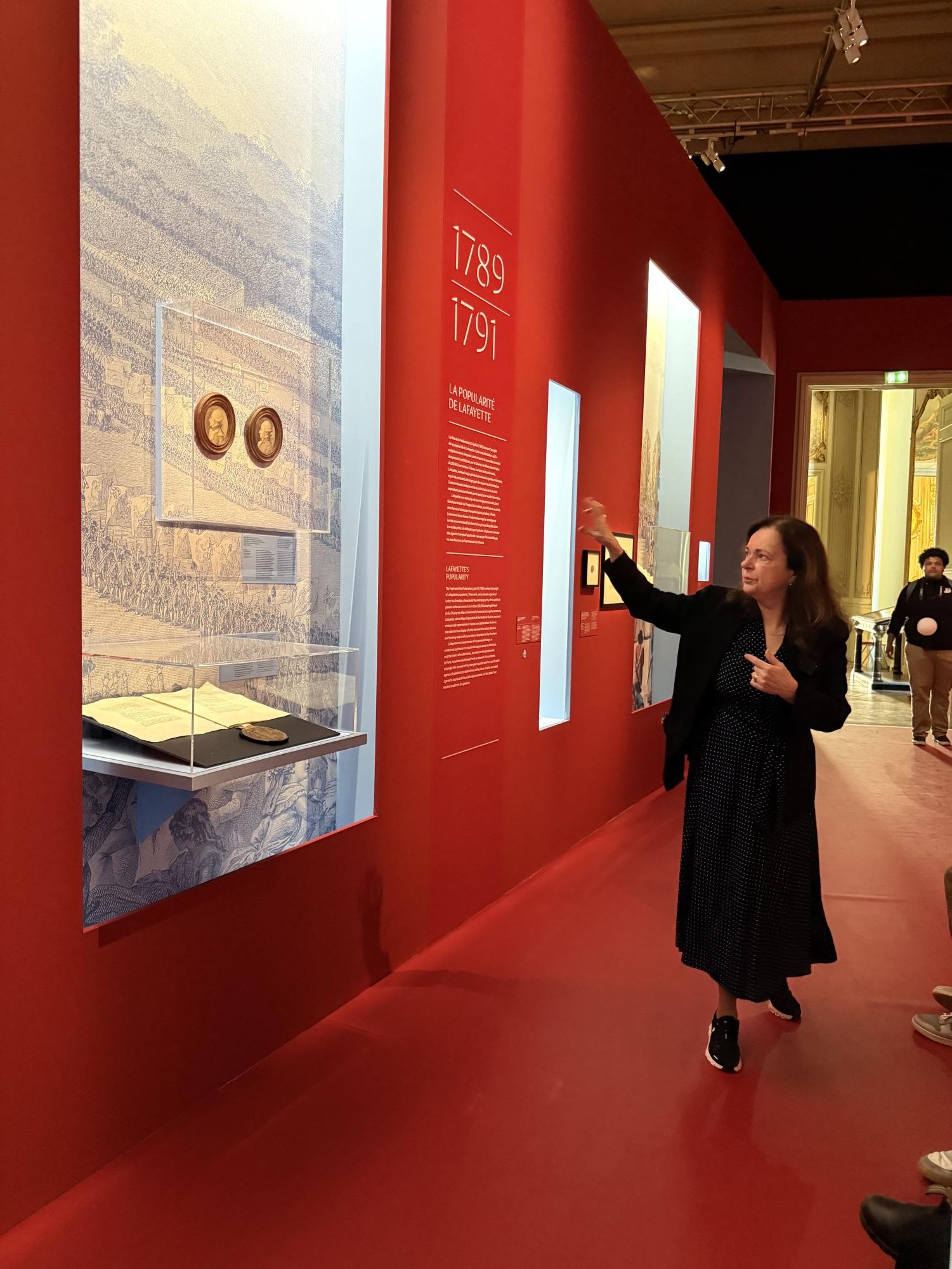
Collaboration between the French and American archivists also brought to light opposing viewpoints on the life of the Marquis “On our side, the American side, Lafayette is somewhat of a saint and a hero, and there were a lot of superlatives about Lafayette and his stature,” said Rico Reyes, the college’s galleries director and curator of collections. “On the French side, they’re much more critical of him.”
“I guess it’s really key to recognize that this can represent Lafayette at its best, when we can give the opportunity for engineers from Germany and Spain to travel to Paris, to have a tour provided by a French professor talking about democracy and globalization,” Senra said. “I think that’s the true essence of what Lafayette can be.”
Another Pard • Apr 13, 2026 at 9:49 am
I guess the only thing that is really clear here is that the Hurd presidency has deeply divided Lafayette and will continue to do so. I wish we could get off this train, but the acrimony from both sides will continue until there is a change. Perhaps the Trustees will quietly act after the Bicentennial ends? College presidencies aren’t usually longer than 6 or 7 years, and they could wrap this up in a face-saving way. I hope so, for the sake of the College.
Just the facts • Apr 11, 2026 at 8:29 am
I agree with comments in last week’s Lafayette about this. My problem with it is that Nicole Hurd has brought half the administration with her, including not-sure-what-she-does Nicole Eramo and CPA Kahr, not to mention the Provost and others. Does the finance VP need to be there?? The head of the academic division? Eramo?? And imagine the millions spent insuring and shipping priceless letters and other artifacts to Paris so these administrators and a few random faculty and students who happen to be in Europe right now can enjoy it.
Anyone who thinks this jaunt will be offset by fundraising is crazy. Hurd will soon begin her sixth year at Lafayette and what does she have to show for it? The capital campaign has been stuck in the “quiet phase” forever because she cannot get things off the ground.
Hurd does not bring in money, she wastes it. Fiscal responsibility is out the window. During her tenure, Lafayette bureaucracy has objectively grown and grown as she has added many more VPs and Assistant VPs and new positions. And the administration is overpaid, too. A few years ago, Nicole Hurd made an annual salary of over one million dollars. That is far more than the presidents of many MUCH higher ranked elite liberal arts colleges. This is a fact. Look it up.
She is overpaid and she underperforms. Organizations do not succeed under that formula. And the strategy of blaming the faculty for her failures is wearing out. The buck stops at the million dollar paycheck.
Spirit of Cur Non • Apr 12, 2026 at 8:42 pm
A college that takes itself seriously does not hide in provincial resentments. It enters the world. It builds international partnerships. It places its scholarship, collections, and intellectual life before a larger public. Lafayette’s participation in the exhibition at the National Archives of France does exactly that.
The exhibition is not trivial pageantry. It places Lafayette in a serious transatlantic frame, linking French and American history, archival scholarship, public memory, and democratic culture. It shows that the college can contribute to work that matters beyond the campus bubble. That is what a good college is supposed to do.
President Hurd deserves credit for understanding this. A modern college president should be globally minded, culturally literate, and capable of moving confidently in worlds larger than faculty grievance and committee chatter. Helping place Lafayette in an international archival and intellectual setting is not a distraction from the college’s mission. It is evidence of understanding the mission at a higher level than many of her critics seem able to manage.
What is truly embarrassing is the faculty response. Too many Lafayette faculty appear less interested in scholarship than in policing opinion, nursing resentment, and enforcing the stale moral and political orthodoxies of their professional culture. They speak endlessly of openness, inquiry, and critical thought, but the moment their own institution does something ambitious, visible, and intellectually serious, they retreat into anonymous sniping.
That is because pettiness is easier than achievement. Groupthink is easier than judgment. Anonymous complaint is easier than open argument. It is much simpler to sneer about administrators going to Paris than to admit that an exhibition of this kind raises Lafayette’s profile, honors serious humanities work, and places the college in a sphere to which it ought to aspire.
The underlying complaint is not really about cost. It is about scale, confidence, and embarrassment. Some faculty cannot stand to see Lafayette act like a college with international reach, because they are more comfortable imagining it as a small, suspicious, inward-looking place governed by their own parochial assumptions. They confuse smallness with seriousness.
Kudos to the Lafayette French Department for helping make it happen. They showed more imagination, courage, and leadership than the anonymous critics who can only respond by dragging everything downward to the level of suspicion and spite. This is exactly the kind of undertaking that should help define Lafayette as a strong and ambitious institution of higher education.
The sad truth is that some faculty would rather rot in their own bitter little chorus of envy than acknowledge that Lafayette can still do something intellectually serious, publicly visible, and larger than themselves.