




































Lafayette College will soon bid adieu to over a century of combined College Hill experience.
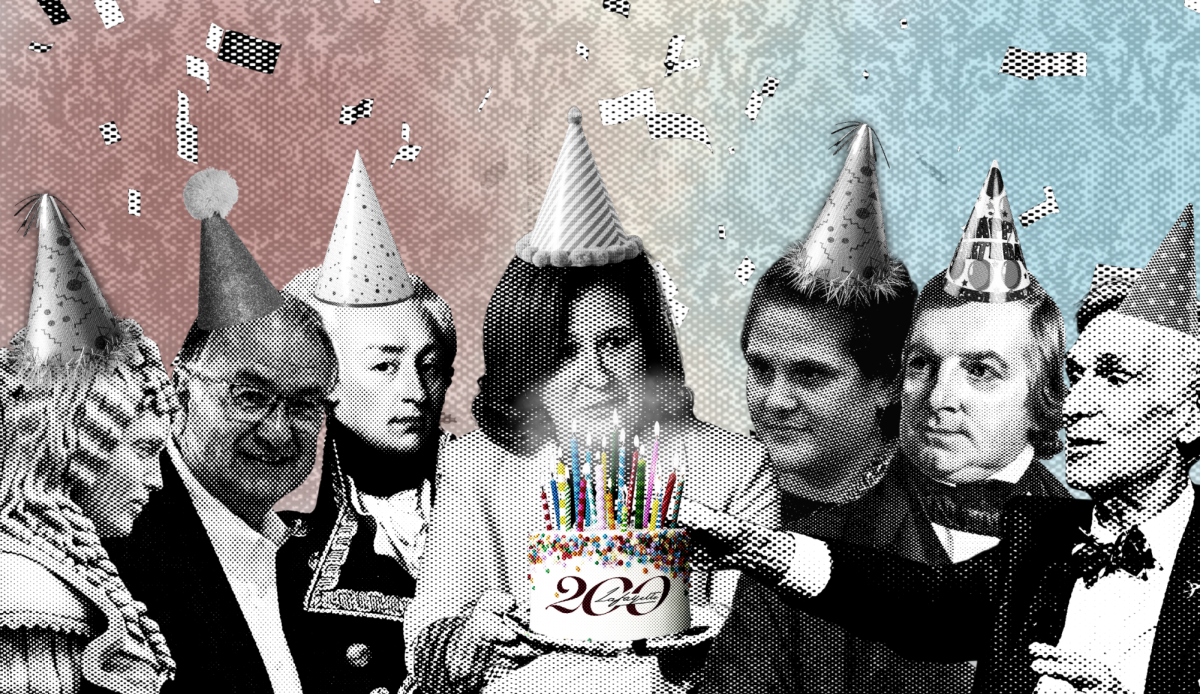
Professors John Shaw, Nancy Waters, Helena Silverstein, Kenneth Haug, Jeffrey Helm, Cliff Reiter, Hannah Stewart-Gambino and Todd Wey are among the 2025-26 academic year retirees, according to the provost’s office.
Here are a few of their stories.
Courtroom to classroom
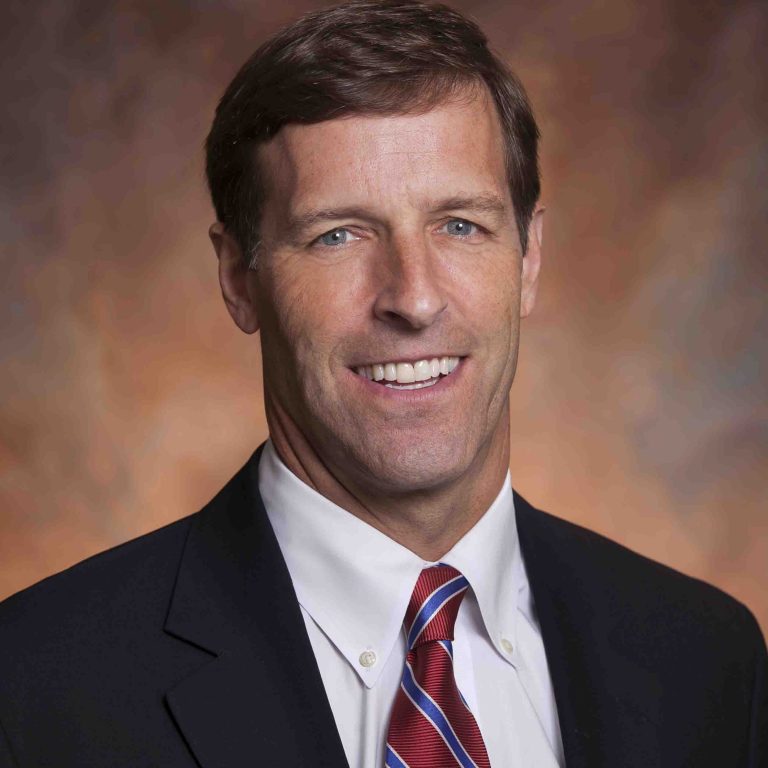
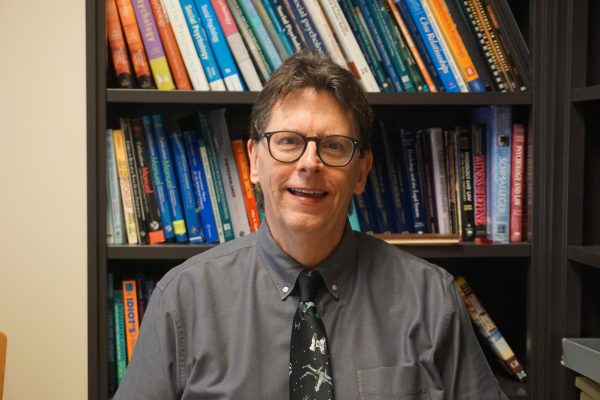
Shortly after lawyer-turned-psychology professor John Shaw arrived on Lafayette’s campus in 1997, he knew he was here to stay.
“I told my wife after about two weeks here, ‘This is the place I’m going to retire from,’” Shaw said.
Shaw earned his bachelor’s degree in economics and Latin from Vanderbilt University before attending Stanford Law School. It wasn’t until after nine years of working as a public defender on the West Coast that Shaw started his master’s in psychology at the University of California, Los Angeles.
“I became interested in eyewitness memory, jury decision and why, essentially, good people do bad things,” he said.
After graduating from UCLA, Shaw and his wife headed east, though his first application for a Lafayette teaching position proved unsuccessful. Three years in Texas later, he reapplied to Lafayette and secured the job that would last him until retirement.
Being able to shape and mentor students throughout their entire education careers was his biggest motivation to teach, Shaw said. The professor has quite a reputation for his zany PowerPoints and collection of patterned ties.
“All faculty have different strengths and different interests, and I happen to be kind of a student-centered faculty member,” Shaw said, calling the role being “teacher-scholars, not the other way around.”
With his daughter, Kendall, graduating from Lafayette in the Class of 2026, Shaw plans to spend his retirement visiting all 63 national parks with his wife, continuing his work as a novelist and living until 103.
Creating opportunities in the sciences
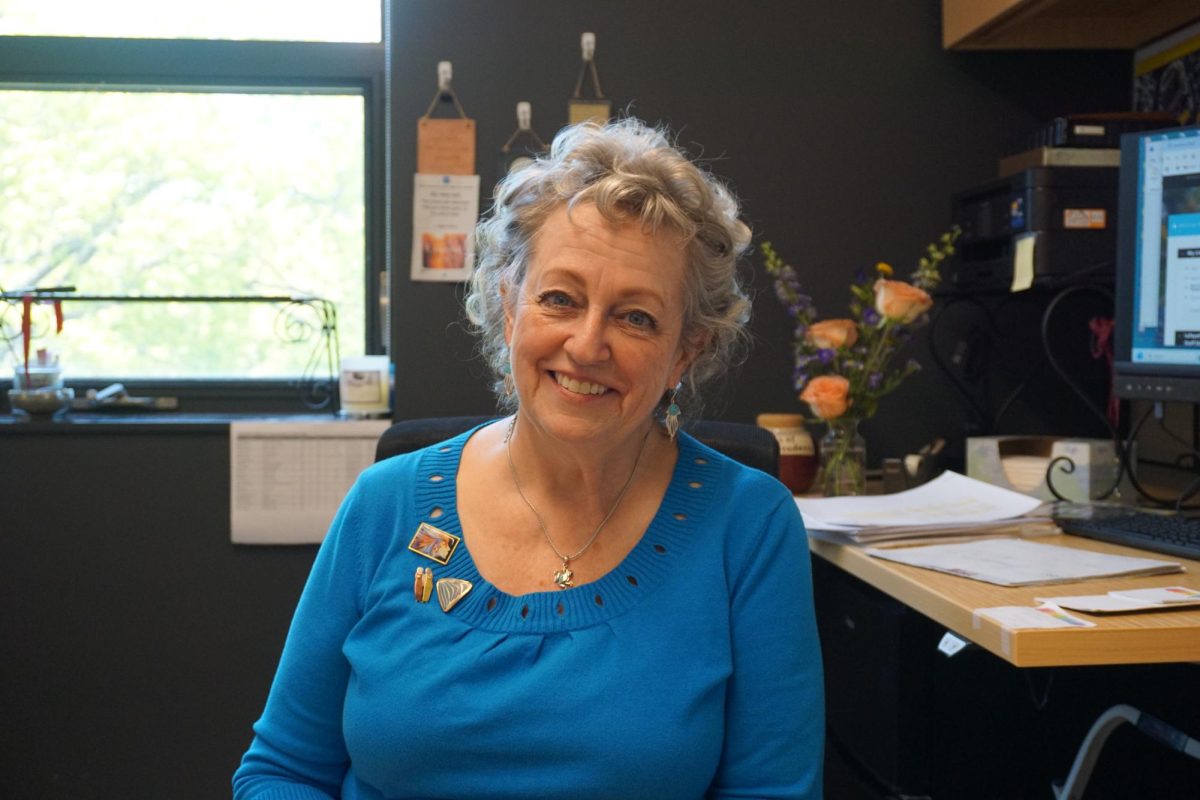
When Nancy Waters, a biology professor and the faculty health professions advisor, applied to Lafayette, she remembers questioning whether or not the college actually wanted a “woman scientist.”
Coming from a household of 14 children, Waters became the first woman in her family to attend college. With assistance from Upward Bound, a federally funded program to matriculate talented students with low-income backgrounds to college, Waters earned her bachelor’s degree at Saint Francis University and a Ph.D. from the University of Notre Dame.
Waters’ niche in the field relied on postdoctoral teaching jobs, which she called “soft money positions,” but her advisor urged her to accept a more stable role at Lafayette.
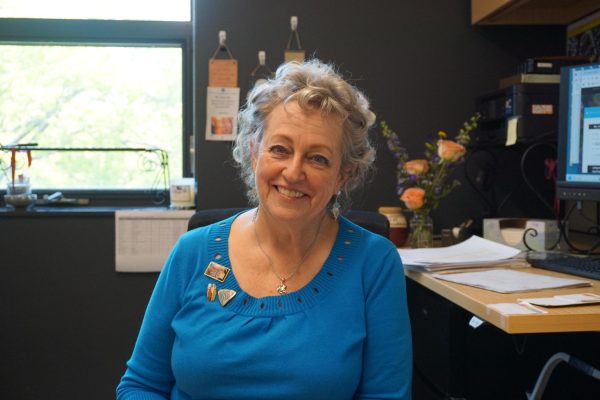
When Waters joined the college, there was no field station for her line of research; she instead traveled to one in the Poconos, which she said was “a bit of a challenge to incorporate into teaching.”
“There were no ecology classes, so I actually started a program,” she said, noting that her efforts helped spur the creation of the environmental studies program.
Waters eventually became the first woman to serve as the health profession program’s faculty advisor, calling the experience “an incredibly rewarding part” of her work.
“We don’t get anybody into medical or dental school,” Waters said. “They get themselves.”
Still, Waters said a perceived lack of recognition for her efforts helped fuel her fire.
“It’s amazing what you can get done if you don’t care who gets credit,” she said.
Today, Waters is a well-known stalwart of the biology department, if not only for the “Monday Morning Donuts” that she drops off in the Rockwell Integrated Sciences Center most weeks.
Three decades of student connection
Government & Law professor Helena Silverstein is calling it a career after 34 years at the college, but not without many warm recollections from her time as a faculty resident advisor for the McKelvy Scholars.
“Many of my early memories revolve around the strong culture of student-faculty engagement, both in and beyond the classroom,” she wrote in an email, highlighting her time spent eating dinner and sitting on the porch of the McKelvy house with students.
Silverstein served as the Government & Law department head for nearly two decades; her research focuses include constitutional law and abortion law.
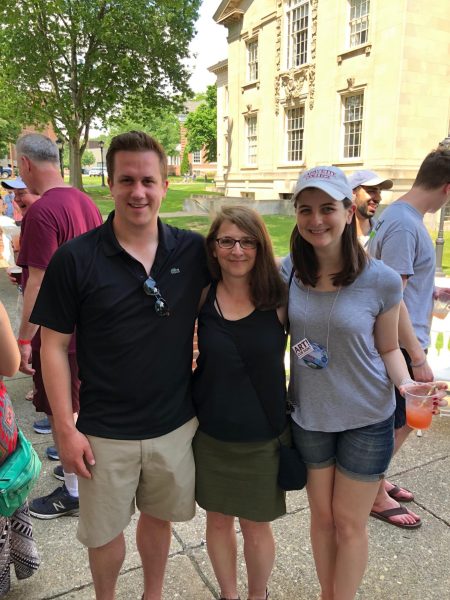
She said she plans to spend her retirement years biking, hiking, reading, playing piano and snowshoeing in the Cascade Mountains.
She added her hopes that, in five years, Lafayette will look “better than it was when I arrived and better still than it is at the time of my retirement.”
Among the remaining retirees:
- Stewart-Gambino, a government & law professor, served as the dean of the college from 2007 to 2013.
- Haug, a chemistry professor, primarily researches computational physical chemistry, surface chemistry and chemical kinetics.
- Helm, a mechanical engineering professor, retired at the end of 2025; his research interests include precision measurement and mechanical design.
- Reiter, a math professor, received a Joseph Johnson Hardy Award in 2025 for his continuous service at the college.
- Wey, an electrical and computer engineering professor, specializes in custom integrated circuits, mixed signal modeling techniques and advanced electronics research.