










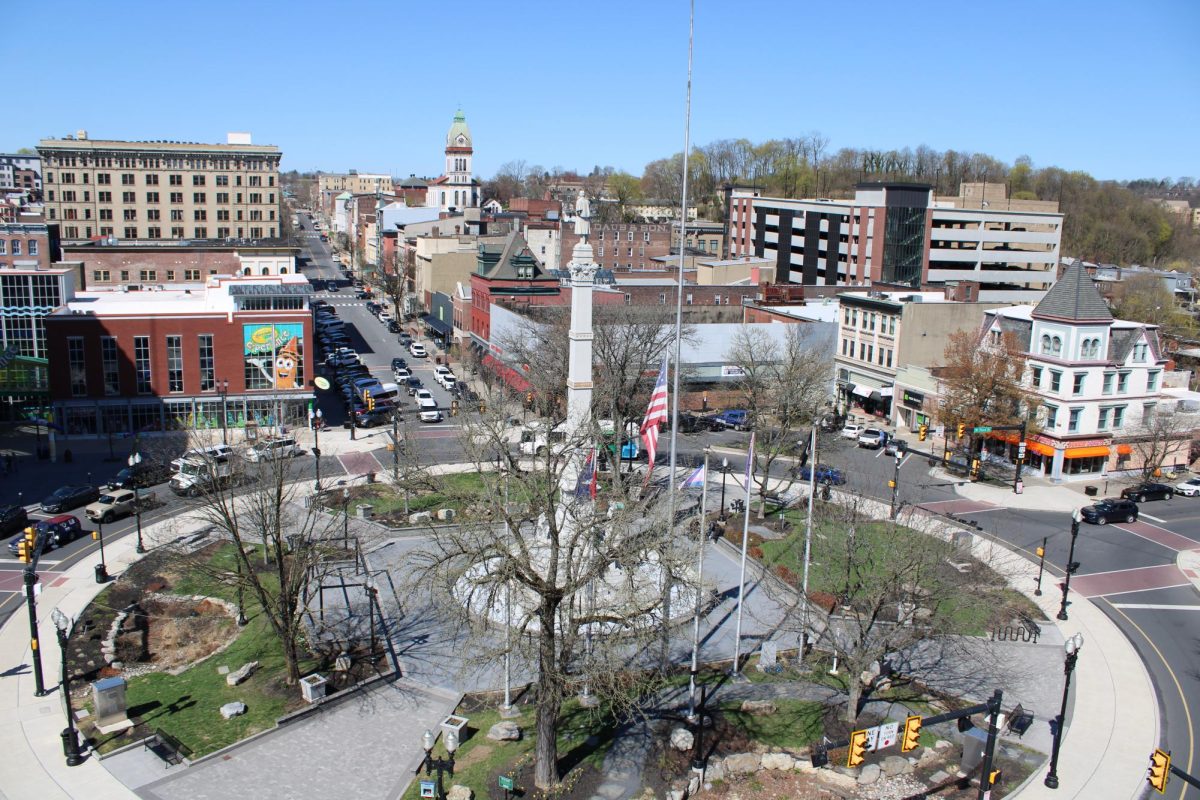












































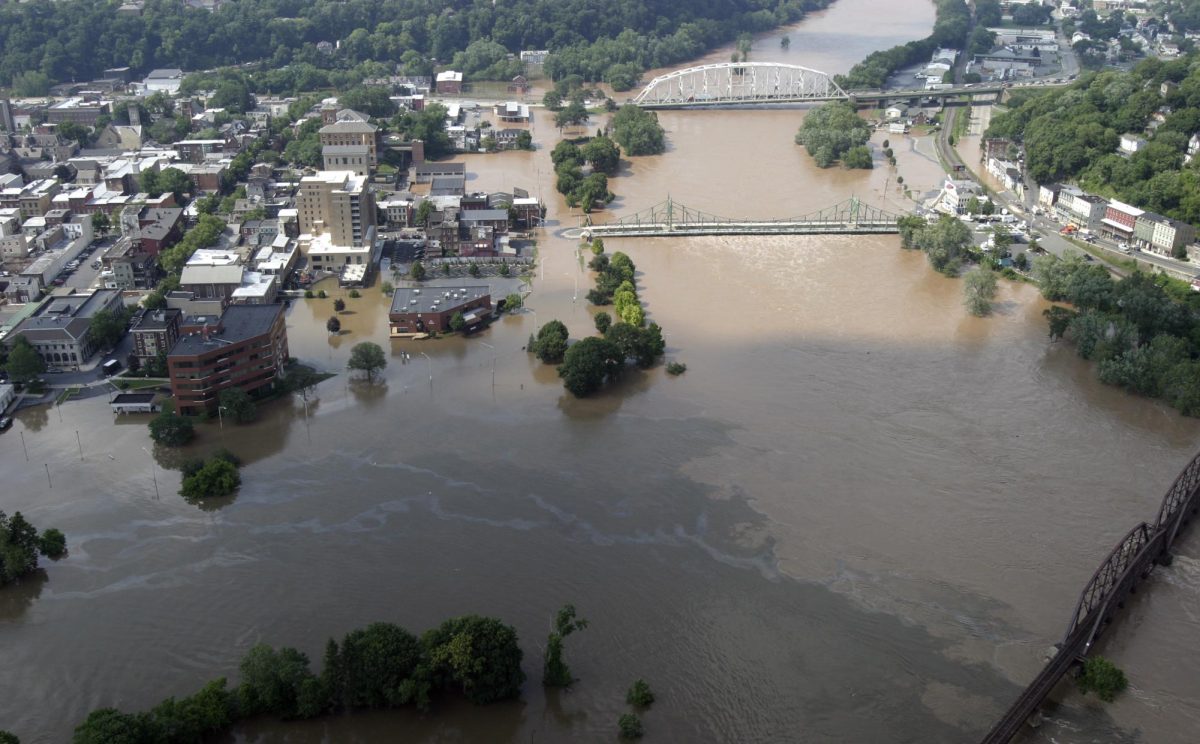
Easton: the city of two rivers, and the city of many floods.
“Easton is located on seven hills, like the city of Rome,” said Mayor Sal Panto Jr. He said that flooding is a risk in the city because of the junction of three bodies of water: the Lehigh River, Delaware River and Bushkill Creek.
The Lafayette has everything you need to know about how it rains and how it pours in Easton.
A history and risk of more frequent floods
“Easton has seen flooding go from a once in a three- to four-year event to becoming something which is an annual event,” state Rep. Robert Freeman said at a climate action event in Easton this past July, as reported by Lehigh Valley Live.
The city of Easton is at “severe risk” for flooding, and according to the climate research program First Street. 62% of Downtown Easton properties are at risk, according to the site, with the neighborhood facing an “extreme risk of flooding over the next 30 years.”
However, the city has been vulnerable to floods for a long period of time.
Seventy years ago, Hurricane Diane slammed the Lehigh Valley, its flooding damaging buildings, roadways and destroying two bridges spanning from Easton to neighboring Phillipsburg.
But now, according to Ian Kindle, a member of Easton’s Environment Advisory Council, the risk of flooding is increasing due to climate change.
These risks were highlighted when the national “Climate Action Campaign’s Extreme Weather Emergency Tour” stopped in Easton for a July media event, in which community members, including civil and environmental engineering professor Christa Kelleher ‘08, warned that “our biggest storms have been getting bigger.”
Kelleher added in her July remarks that national climate data has been jeopardized because of staff cuts following President Donald Trump’s inauguration.
Where does the floodwater come from?
Kindle explained that the Lehigh River descends nearly 1,900 feet over hundreds of miles away from the nearby Poconos region, directing stormwater and snowmelt downhill rapidly and increasing the risk of floods.
“When both the Lehigh and Delaware rivers clash, waters often inundate Easton if there is excess water,” Kindle wrote in an email, adding that “really, anywhere there’s a steep slope, whether paved or not, the water is going to flow and accelerate.”
Panto emphasized that the city is most at risk from flash flooding, when city residents may not be anticipating a high risk of flooding.
As for Lafayette College, Kelleher explained in an email that “the majority of campus is at high elevation and is unlikely to be directly impacted by flooding.”
What is the city doing?
The city requires all buildings to be built 18 inches above Easton’s floodplain. It’s why many historic buildings have largely avoided a severe flood, according to Panto.
In December, Easton City Council adopted a plan to commit to removing unused dams in Bushkill Creek, repairing hazardous parts of bridges and moving the city’s emergency services out of the floodplain.
The recent changes also pushed Easton to meet the requirements to join the Federal Emergency Management Agency community rating system, which would lower disaster insurance costs for residents.
Rachel Hogan Carr, the executive director of the Nurture Nature Center, also mentioned that the city is working on new drains throughout roads more vulnerable to flooding, such as on Northampton Street, Spring Garden Street and Bushkill Street.
She argued that the flooding management in the city could use improvement, and that the plan does include a public outreach clause, but its communications are only via mail and website information.
What should I do to avoid a flood?
Carr suggested that “residents should receive local alerts through the city of Easton and through Northampton County,” through texts or other messaging. She recommended developing emergency preparedness kits.
Kelleher wrote that “having a plan in place, especially to check in on more vulnerable neighbors,” is important for being able to respond in the case of an emergency.
She cited the risk and possibility of a cloudburst event — known as an extremely localized, and unexpected violent downpour.
“Turn around, don’t drown,” Kindle wrote of advice for Lafayette students should they encounter a flood in the city. He suggested that “deciding whether or not to drive a vehicle into floodwaters is probably the number one most dangerous situation a student might encounter.”