






















































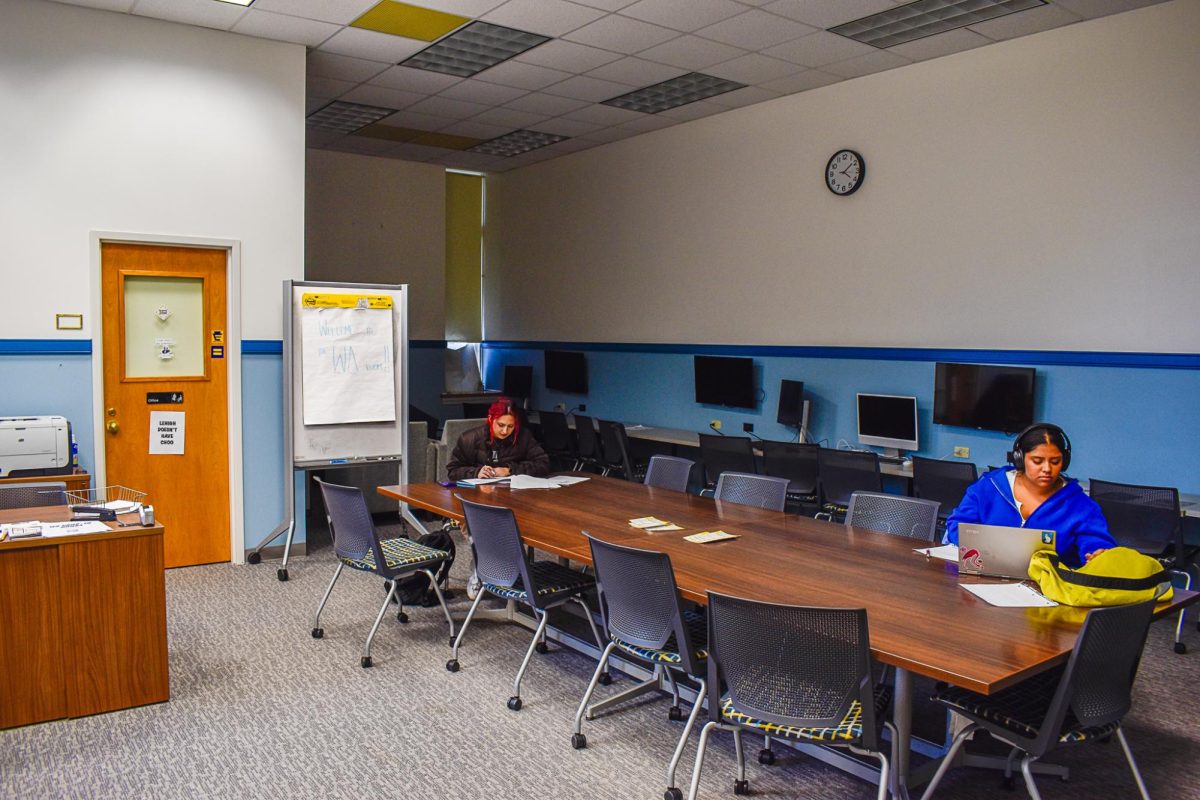
The College Writing Program overhauled its compensation system this semester and now pays writing associates, commonly known as “WAs,” an hourly wage, ending a decades-long practice of offering stipends.
The move, which allowed the program to retain all 56 of its writing associates — its largest cohort ever — for the spring, comes as increased demand for associates and limited funding have stretched the program’s resources thin. Writing associates now receive $10 per hour, placing them in the highest-paying student employee tier.
Program director Emma Hetrick said that over two-thirds of the program budget was used to pay writing associate salaries, adding that only 20 writing associates could have been retained with stipends after communicating with the Provost’s Office.
The hourly system was conceived following a routine meeting with Associate Provost Markus Dubischar in early October. To counteract the anticipated shortfall, Hetrick conducted research throughout the month at Dubischar’s request.
Other concerns emerged. According to the college’s website, Lafayette’s employment guide implicitly discourages paying employees in stipends by prohibiting disparities in “rates of pay, benefits, and opportunities for overtime or other compensation received by any group of employees as compared to any other group of employees performing equal duties.”
“We recognized that an 18-person class where students submit drafts in advance and meet with their WA is more work than a five-person class where they don’t,” Hetrick said.
“It was decided that hourly pay was a more appropriate and equitable way to compensate the work being done on campus,” wrote Provost Laura McGrane in an email, who was presented the budget breakdown in November.
Hetrick said that college administrators were “very receptive” to the budget request change.
Hetrick referenced a 2001 advertisement from The Lafayette listing writing associate stipends at $940 per semester — over $1,700 today with inflation — to display stagnant wages. Associates who worked both semesters of the 2024-25 school year received around $1,700 total.
The program director also said that she asks for an annual budget increase to reflect heightened demand amidst artificial intelligence in writing and an increase in First Year Seminar course offerings.
McGrane did not answer a question regarding the writing program’s other funding concerns.
The new pay system occurred as the college increased its student minimum wage by $1.75 an hour since 2022, after years of pressure from Student Government.
Some writing associates appreciated the new system’s equity, but expressed reservations over its reduced pay.
Chris Murphy ‘27, a second-year writing associate who works with an 11-person history class, said his fast math left a bitter aftertaste.
“I did some quick calculations, and I was a little disappointed,” Murphy said. “For my class size, it is a significant pay cut.”
Camsey Noonan ‘26, a mentor writing associate who works with a larger theater class, said they were “very understanding” of the changes, but preferred a steadier stream of income.
“One nice thing about the stipend was the consistent sum coming in,” Noonan said. “For somebody who relies on that income to buy groceries and support themselves, that’s definitely important.”
When asked if pay cuts would discourage associates from taking on smaller classes or working drop-in hours, writing associate Alexa D’Agosta ‘28 said, “Everyone seems to enjoy their job and be really passionate about it.”
“We’re all busy college students,” D’Agosta said. “We just like to help.”
Disclaimer: Managing Editor Benjamin White ‘27 and Assistant News Editor Makenna McCall ‘27 are employees in the College Writing Program. They did not contribute writing or reporting.
A correction was made on Feb. 16, 2026: A previous version of this article misstated the last name of Chris Murphy ’27.

CWP alum • Feb 13, 2026 at 9:30 am
Sad to see the stipend go under the guise of equity. Since students don’t control which class they WA the rationale under previous iterations of CWP – that I tend to agree with – is that between higher level courses with fewer students typically requiring more expertise and a general understanding that no two WA experiences could be compared side to side – the ONLY equitable way was to stipend. Seems like if it’s a cost cutting measure they should just go out and say it.
Madeleine Proulx • Feb 17, 2026 at 8:07 pm
Also a former WA- could not have imagined having a certain salary one semester and it being cut down the next. Especially when you don’t have any say in the course you’re assigned. Also to note, some of those smaller, higher level classes require a deeper level of work and understanding of the material than an FYS (which is obviously a high volume, but easier to grasp). Those are usually assigned to more senior WAs, and it hardly feels fair to be making less the longer you stay with the program.