








































From sermons, baseball, pristine pageants and promenades, Lafayette College has found no shortage of ways to mark its anniversaries over the past 140-plus years.
First fests
Despite the college’s establishment of Founders’ Day in 1874 in conjunction with Pardee Hall’s dedication, its first recorded anniversary celebration would not materialize until June 1882, in honor of its semi-centennial.
Then closely affiliated with the Presbyterian Church, the college kicked off its four-day celebration with mandatory morning prayer and a keynote sermon from college President William Cattell, while local seer C.S. Melvin used his “prophetic vision” to predict the graduates’ occupations by 1900.
In addition to worship, students also enjoyed baseball, America’s “national pastime.” After an exhibition match with a Philadelphia baseball team fell through at the last minute, attendees quickly worked to assemble an opposing squad made up of Eastonians and one student. With experience on their side, the College Hill crew prevailed in a 22-5 walloping, according to a box score from the semicentennial recap.
Though the 1907 “Diamond Jubilee” celebration didn’t feature a baseball game, the Sock-And-Buskin drama club put on “When Lafayette Was Young,” a two-act musical comedy comparing the college in 1857 — at the height of its financial duress — and 1907.
Centennials, pageants galore
The Roaring ‘20s provided a perfect pretense for both Lafayette students and Easton natives to celebrate once more. The city presented its gift to conclude “The Pageant of Easton,” a nine-part play depicting Easton’s history, in 1924.
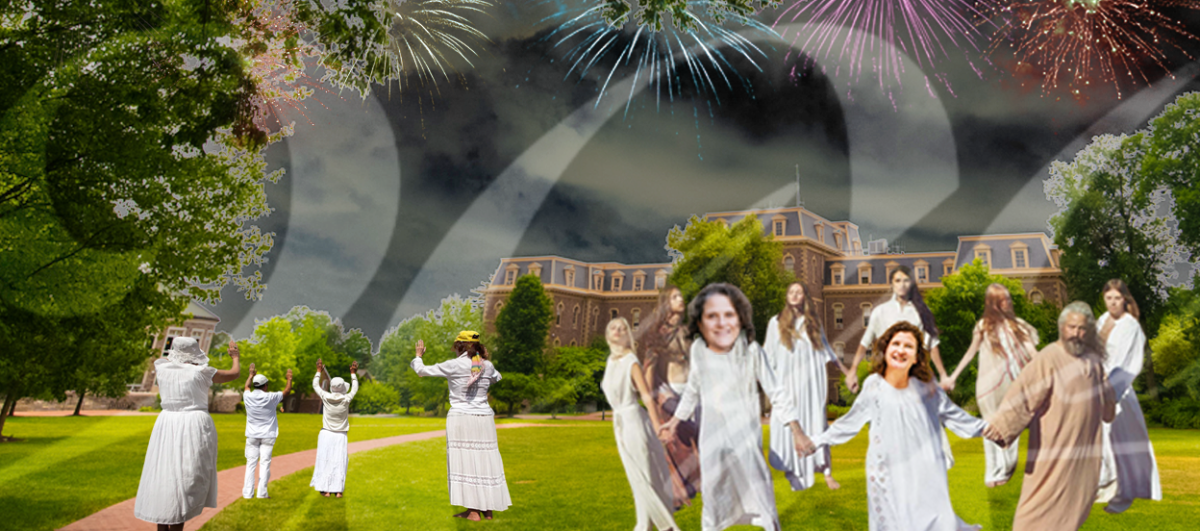
Thespians would only have to wait another eight years before another theater-heavy celebration in 1932. Despite the cancellation of a planned capital campaign due to the Great Depression, the college still managed to organize “The Pageant of Lafayette, The Man and the College,” a 20-episode behemoth written by a theater professor. The first act included vignettes of Lafayette reacting to the “shot heard round the world” in 1775 and his convalescence in Bethlehem in 1777, while college history filled the second.
The centennial coincided with George Washington’s 200th birthday; the Marquis Players put on a three-show run of “The Contrast,” a 1787 comedy satirizing British culture of which Washington was an early subscriber.
Sesquicentennial surprises
Extravagant pageants finally gave way to a smorgasbord of musical festivities for the sesquicentennial celebration, amidst a climate that James Cottrell ‘77 called “disruption on a national political scale,” including President Richard Nixon’s resignation and the aftermath of the Vietnam War.
“I remember some of the conversations that were held back in my junior and senior year around engagement and what it meant,” Cottrell said, adding that discussions of the Magna Carta, a 1215 English charter that attempted to restrict royal power, left a lifelong impression. “50 years later, I’m sitting here still thinking about it.”
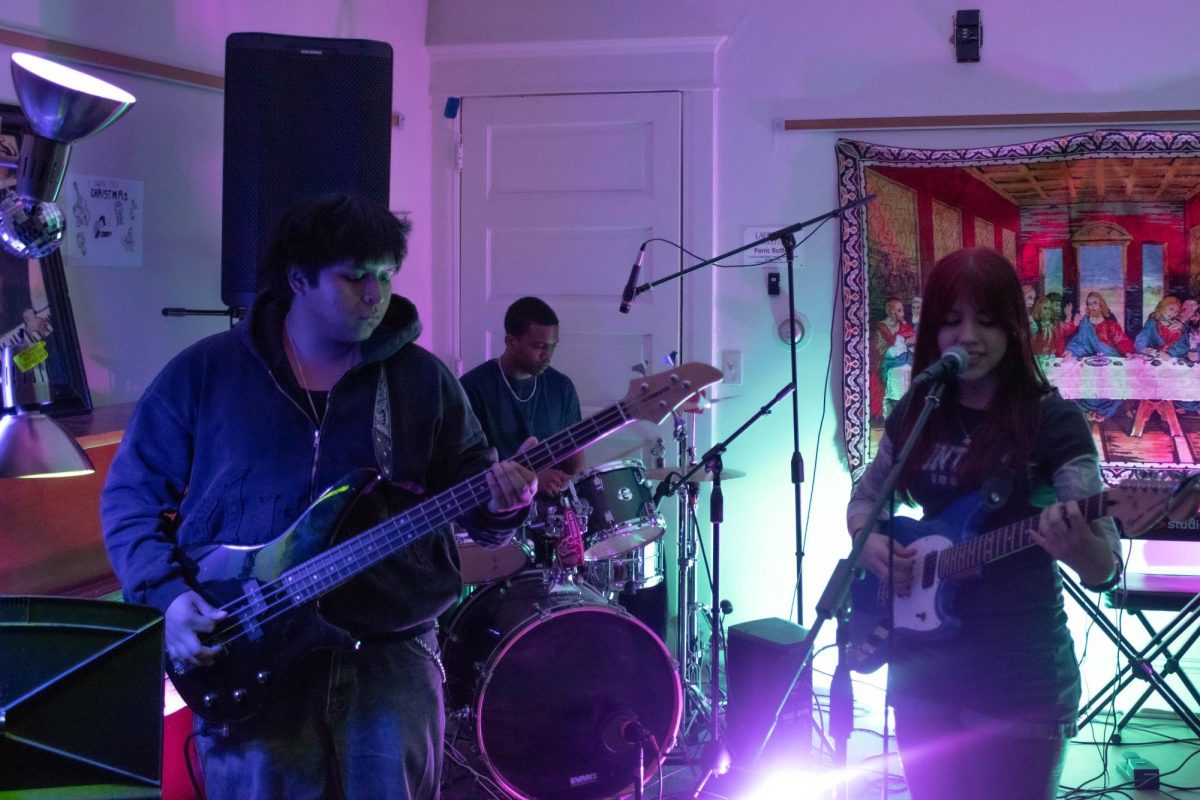
Homecoming weekend saw the marching band play a sesquicentennial-themed halftime show — featuring music played during the Marquis de Lafayette’s 1824 Philadelphia visit — with a joint concert between the rock bands Jethro Tull and UFO rollicking Kirby Field House 12 days later.
Students also organized a college birthday on March 9, but the “All College Day” two months later took the (figurative) cake for Cottrell. He turned 21 that day and emceed the festivities, including the longtime choir director John Raymond’s final recorded performances before his retirement.
“It was one hell of a lot of fun,” Cottrell said, “but it was also in recognition of our 150th.”
Lafayette’s celebrations effectively rolled into the American bicentennial that July; Cottrell said several friends who graduated from Lafayette in May spent their June aboard the ships in the New York Harbor.
175 and beyond
Though President Arthur Rothpokf ‘55 mentioned the 175th anniversary shortly after the openings of Williams Visual Arts Building and Hugel Science Center that February, the college’s 175th anniversary was comparatively limited in scope.
A series of four archival talks given on “Lafayette in the 19th Century” was branded as the 175th anniversary. English professor Bianca Falbo wrote in an email that while she remembered giving her talk about Francis Andrew March, she didn’t recall much else.
The Sept. 11, 2001, terrorist attacks put a damper on whatever festive dispositions existed, according to economics professor Susan Averett. She said that “even something minor” would have been overshadowed by the attacks.
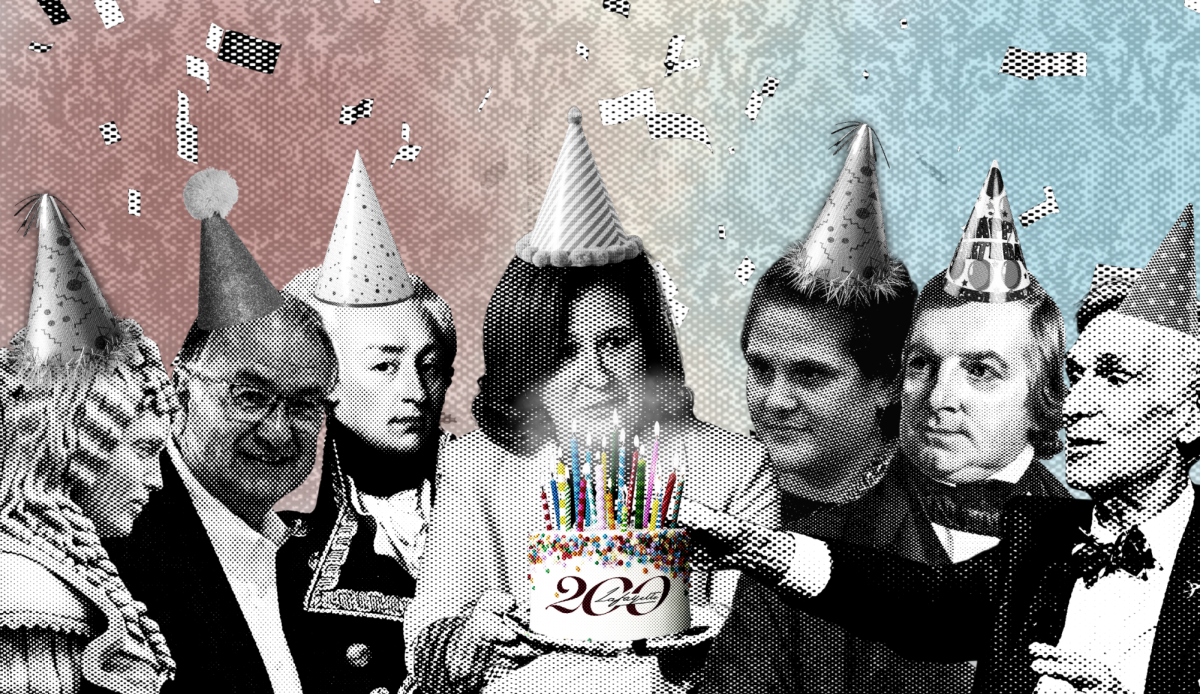
By contrast, the bicentennial celebration Lafayette advertises has been loud, visual and fun.
At the fall 2025 “La Fête,” French flag bunting hung from a large tent on the Quad, servers dressed as mimes prepared French food and an actor caricatured a French painter at the combined family weekend-homecoming-Fall Fest. Fitz and the Tantrums — a band best known for its 2016 song “HandClap” — performed that evening.
Merchandising evolved with the times. College organizations sold commemorative plates ahead of the 100th, 125th and 150th anniversaries; these days, aspiring shopaholics can buy limited-edition Abercrombie and Fitch clothing and a Crayola crayon set with colors like “Marquis Maroon” and “Day on the Quad” green.
The sesquicentennial saw U.S. Treasury Secretary and alumnus William E. Simon ‘52 deliver the commencement address; this year saw Lin-Manuel Miranda and Bill Nye swing by Kirby Sports Center courtesy of the bicentennial fund.
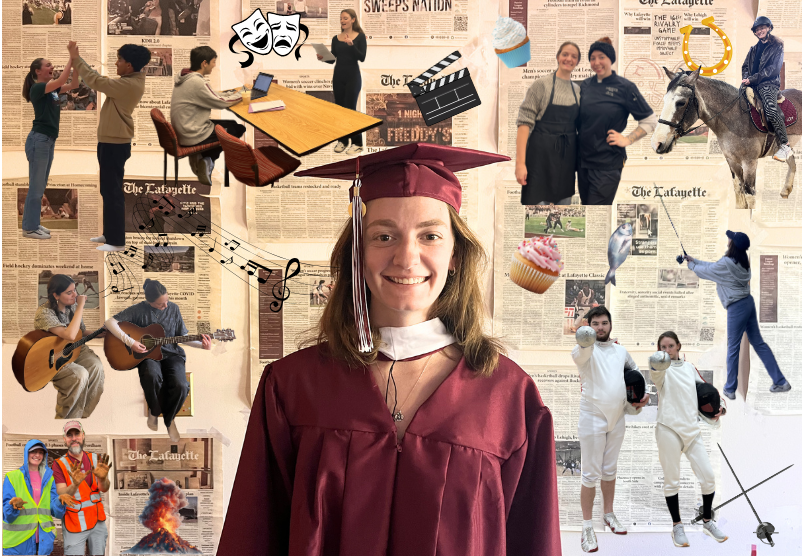
No buildings or pageants this time, either, but the Marquis de Lafayette (in the form of famed reenactor Mark Schneider) and his wife, Adrienne de Noailles (in the form of a large turquoise bust installed on the steps of the library), did make visits to campus. The class of 2026 will wear maroon regalia with gold “200” tassels instead of the standard black robes.
A student time capsule is in the works, as is a fourth volume of “The Biography of a College,” a commissioned book series detailing Lafayette’s history that last left off in 1978.
That bicentennial spirit seems to have rubbed off on Cottrell.
“I have never been more proud to have a liberal arts education than I am today,” said Cottrell, calling the 2026 celebrations much more “well-thought-out and acknowledged” than the sesquicentennial festivities.
Unlike the centennial double-dip, however, he doesn’t expect another celebration in 2032.
“I feel like this is a moment,” Cottrell said.
Elisabeth Seidel ‘26 contributed reporting.
