




































































Sitting in my biology lab, I took my usual distracted glance out the window. In the 8-degree Fahrenheit outdoors, I could clearly see crowds of naked trees, mounds and mounds of packed powder and a mysterious building releasing warm clouds of smoke.
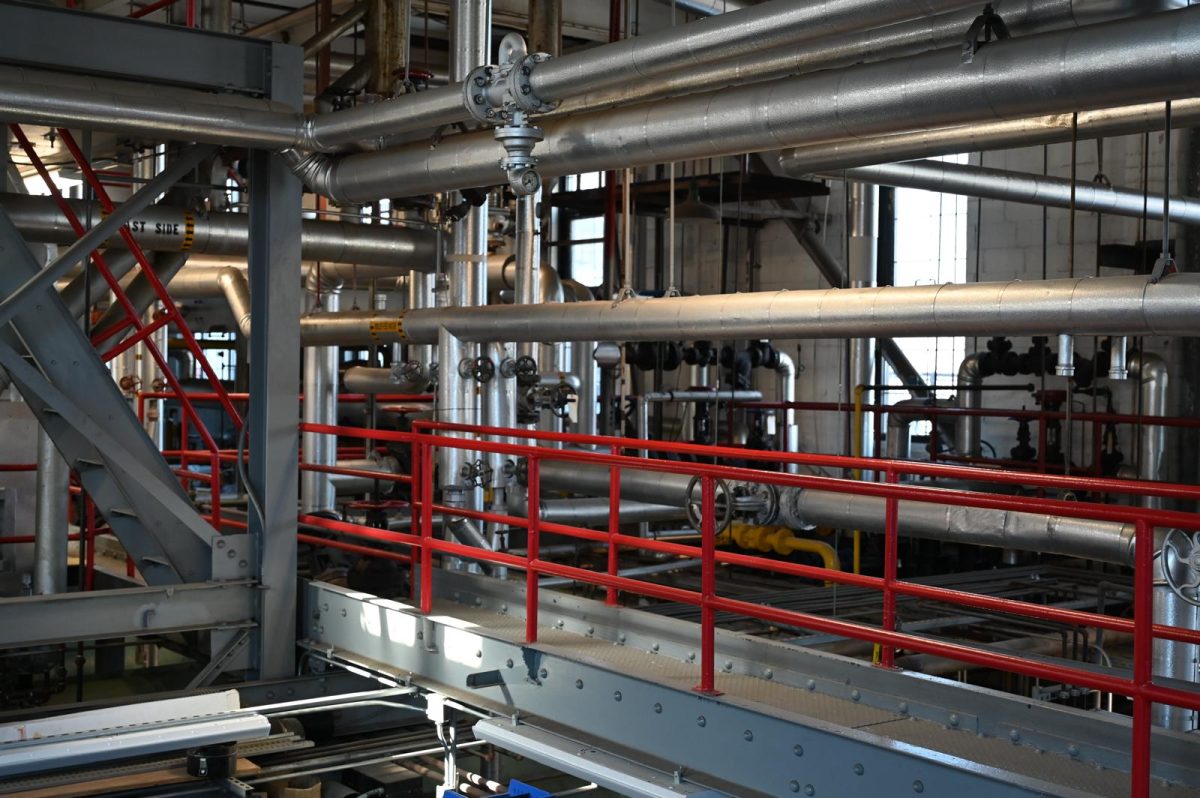
The strange-cloud-forming building behind Rockwell Integrated Science Center and Acopian Engineering Center is the on-campus steam plant, which heats about 90% of the Lafayette College campus, including most of its academic and residential buildings.
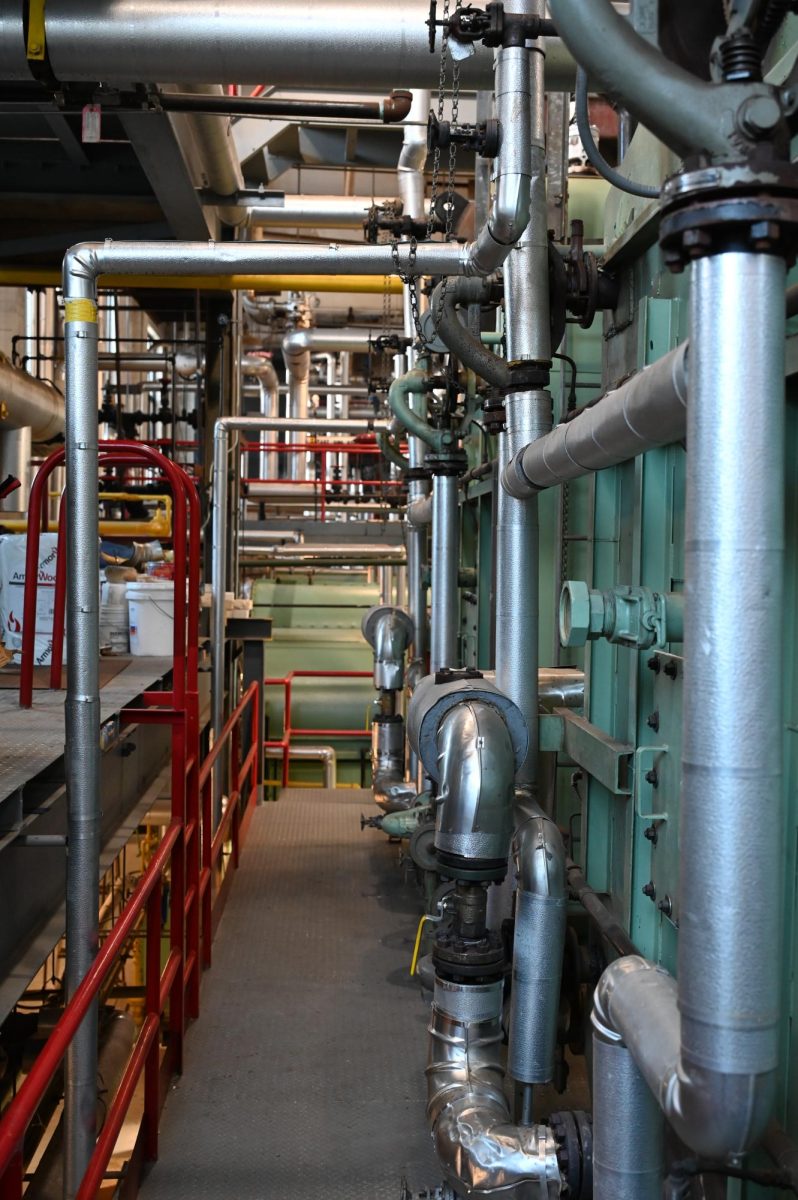
The steam plant, built originally in 1948 and powered by natural gas since 2008, is 5,600 sq. feet of pipes and heavy machinery. It is operated by four operators, a mechanic and its supervisor, David Smith.
“There’s somebody here 24 hours a day,” Smith said.
But how does it work?
As Smith explained, a burner in the plant combusts natural gas, and the energy created heats up water in a boiler to form steam. The massive amount of pressure from all the steam flowing through pipes pushes heat into our bedrooms, classrooms and other spots around campus.
To heat almost the entirety of a campus like Lafayette College, this takes quite a bit of force.
“We make 100 pounds of steam, so that’s 100 pounds of pressure,” Smith said.

Brimming with dangerously high temperatures and large machinery, there’s plenty of room for safety hazards or malfunctioning. However, in his 24 years of experience at Lafayette, Smith has rarely encountered any functional issues.
“Maybe, two times, the steam has stopped flowing for 10 minutes,” he explained. “Nobody even notices.”
While the plant’s efficiency can’t be denied, it is not without its environmental downsides.
In drafting their Climate Action Plan 3.0, Lafayette’s Office of Sustainability has outlined three possible solutions to steam plant-based heat, which accounts for about 11% of the campus’s emissions.
One option is an operation called “direct carbon capture.”
“We’d be eliminating the emissions associated with the steam plant by capturing emissions before they enter the atmosphere,” said sustainability staffer Conner Elliott-Knaggs, who helps manage the college’s climate action programs.
Another alternative is a decentralized heating system, in which the usage of the plant is reduced over time through a system of heat pumps, though this would use more electricity.
The final method being considered is a geo-exchange loop, or a ring of underground pipes around the campus that powers specific buildings.

“Instead of deriving the heat energy from burning natural gas, we would be tapping into geothermal heat,” Elliott-Knaggs explained. “That one is probably the most long-term.”
Regardless of changes, “the steam plant would operate as it has been,” he said.
Smith said that adapting to fit the school’s sustainability goals may have little effect on the people working at the steam plant.
“I think everyone will still be here, but with big changes,” he said.
Disclaimer: Editor-in-Chief Elisabeth Seidel ’26 and Assistant News Editor Makenna McCall ’27 are both employees in the Office of Sustainability. Neither contributed writing or reporting.
